I have to finish reviewing 7 submitted drafts before the end of my shift, and I can’t reject anything based only on a detector result. Is Sapling AI Detector useful for deciding which passages need a closer manual review, or does checking the writing myself end up taking the same amount of time? I’m mainly concerned about polished, formulaic paragraphs getting flagged when there’s no other reason to question the author’s process.
Setting up the comparison
I tested the same six English passages without changing them between tools, counting only completed scans. On October 2–3, 2026, I worked through generated writing, a Lewis Carroll excerpt, and that excerpt lightly edited by AI. The generated material covered an essay, memo, paraphrase, and fictional personal story.
I kept screenshots of results and access barriers. Before comparing scores, I separated confidence, probability, and estimated AI share. Those labels describe different things. Some samples were related, and a literary excerpt was a narrow human control.
Reviewing the completed checks
Once I had results, I looked for tools that recognized both origins. Clever AI Detector completed everything without payment or registration, catching the generated passages and accepting Carroll. Its sentence markings and explanations were less consistent.
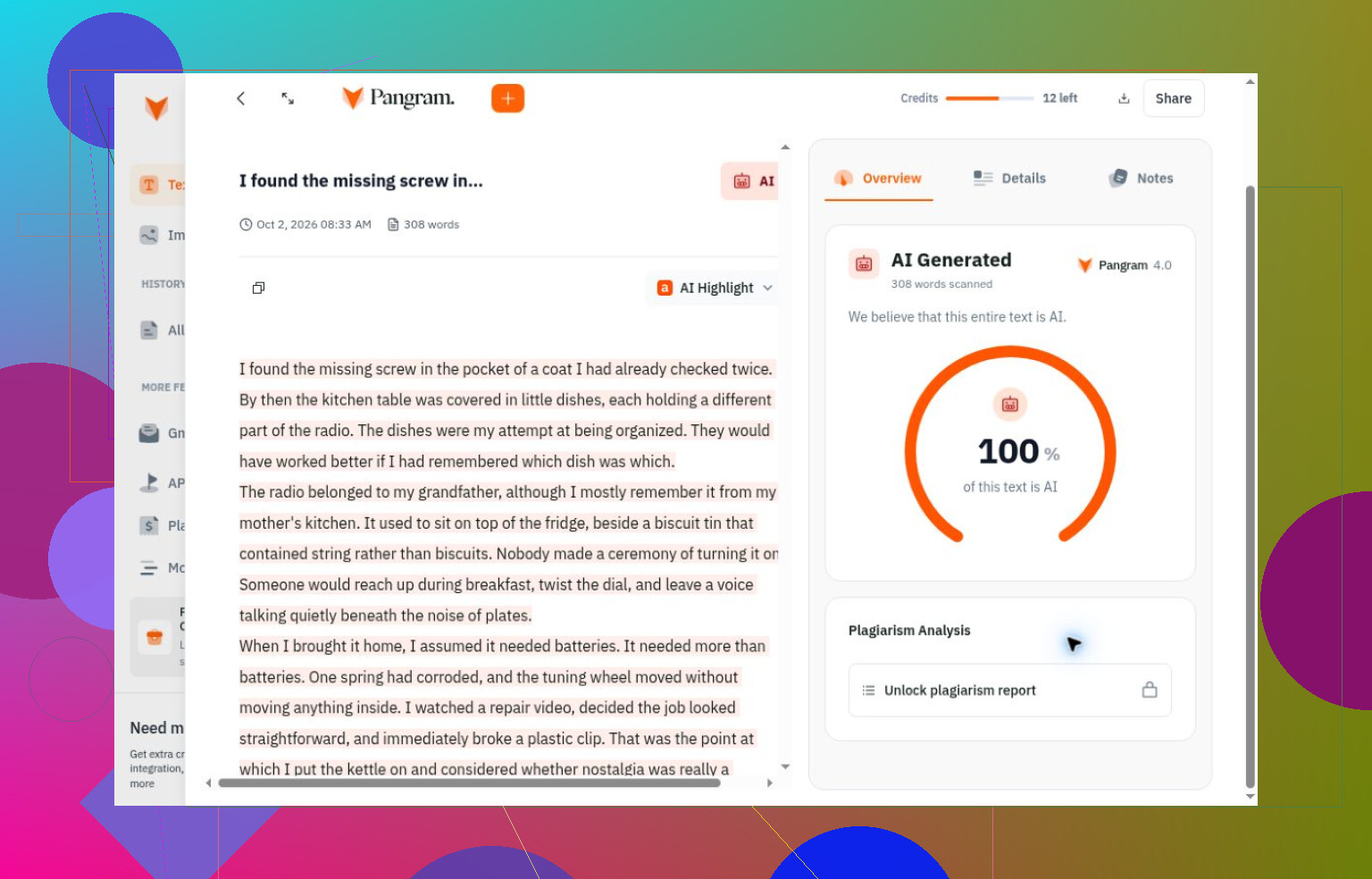
Pangram correctly handled its completed generated and human checks, but credits ran out. Both tools labeled the lightly edited excerpt human.
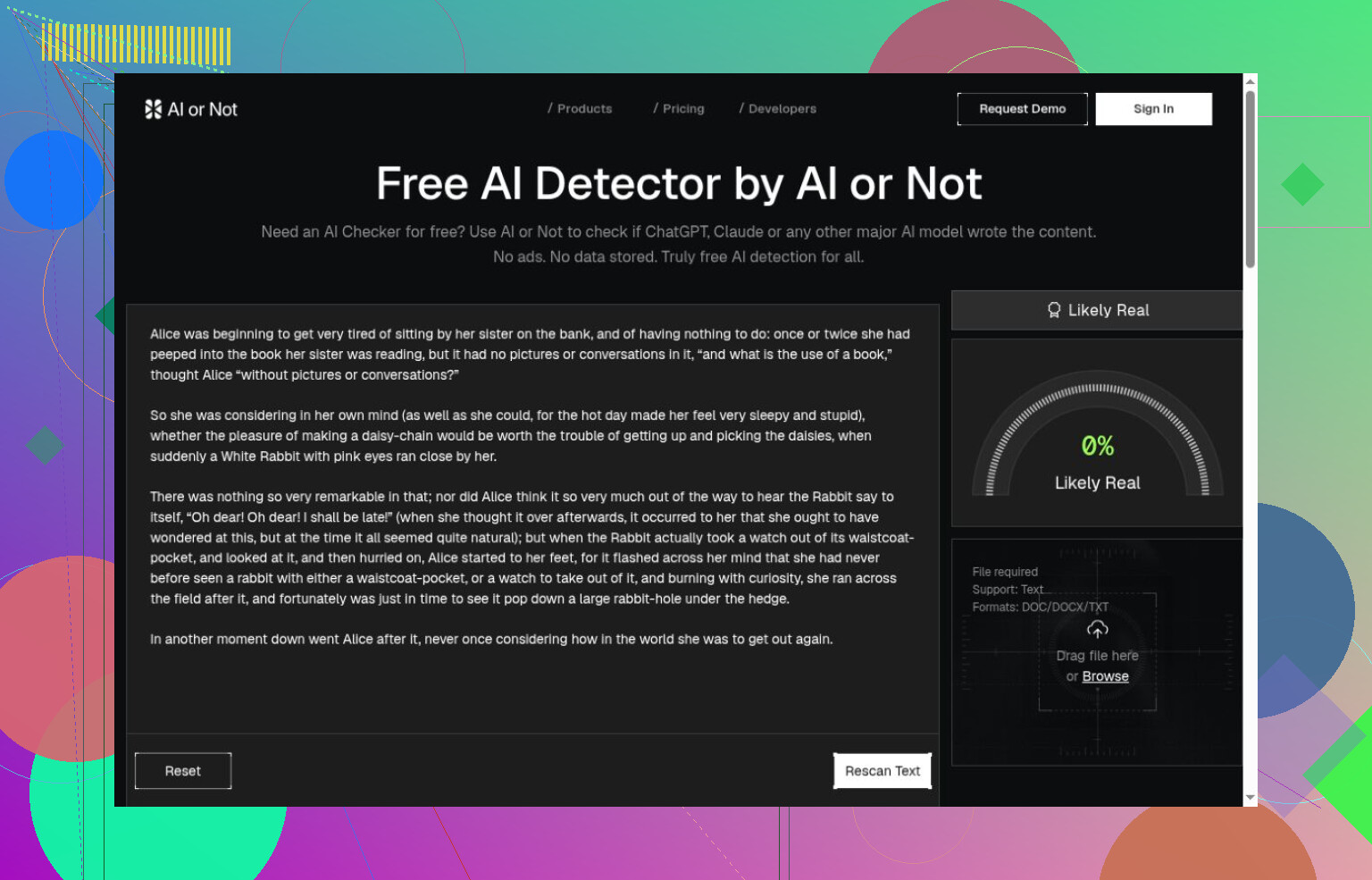
Originality.ai and AI or Not also got their completed checks right. Originality’s 100% confidence applied to my selected 15% AI Allowance, not generated-word share.
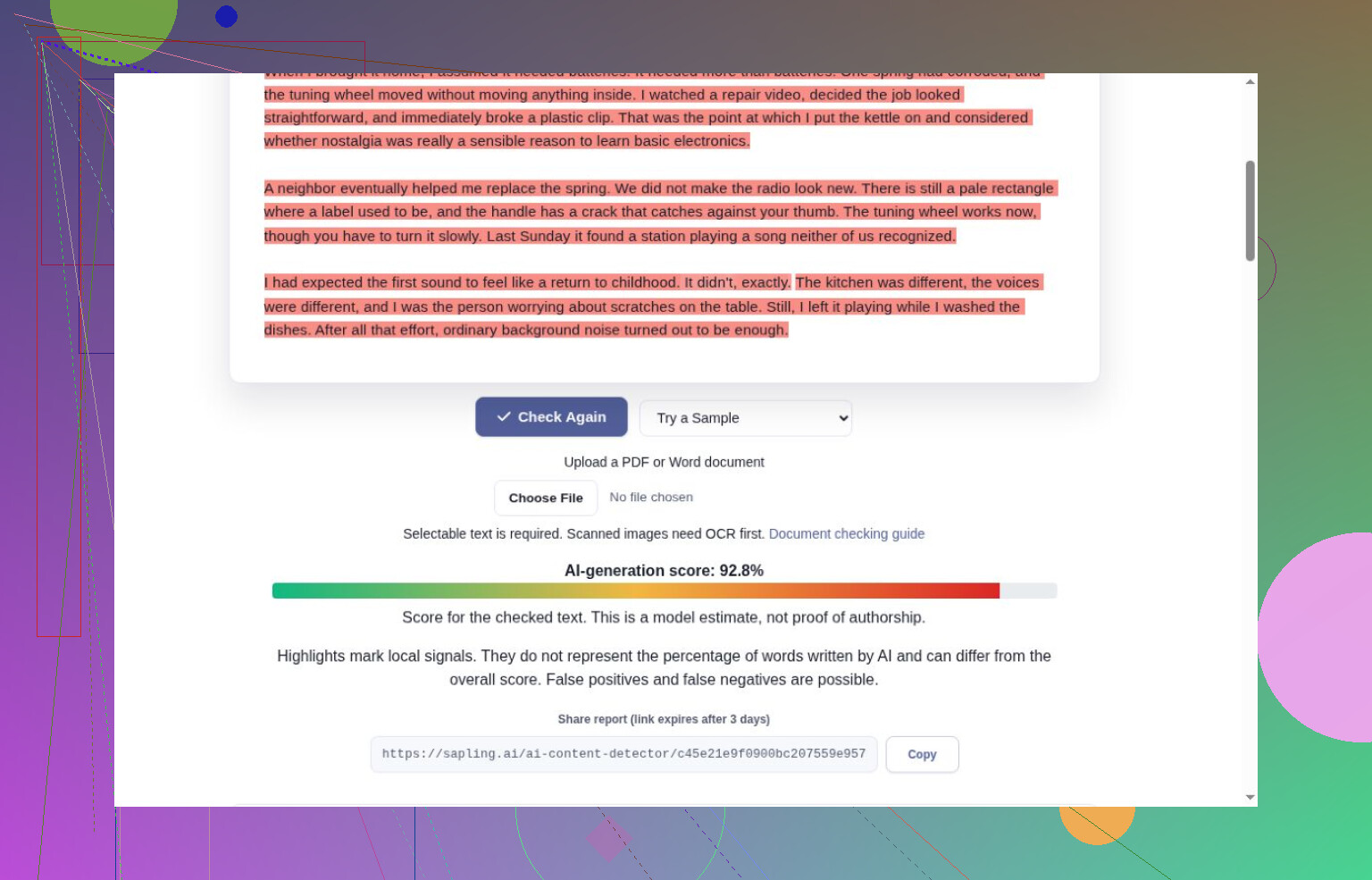
Sapling correctly classified the complete story and human sample, but truncated the essay at 2,000 characters.
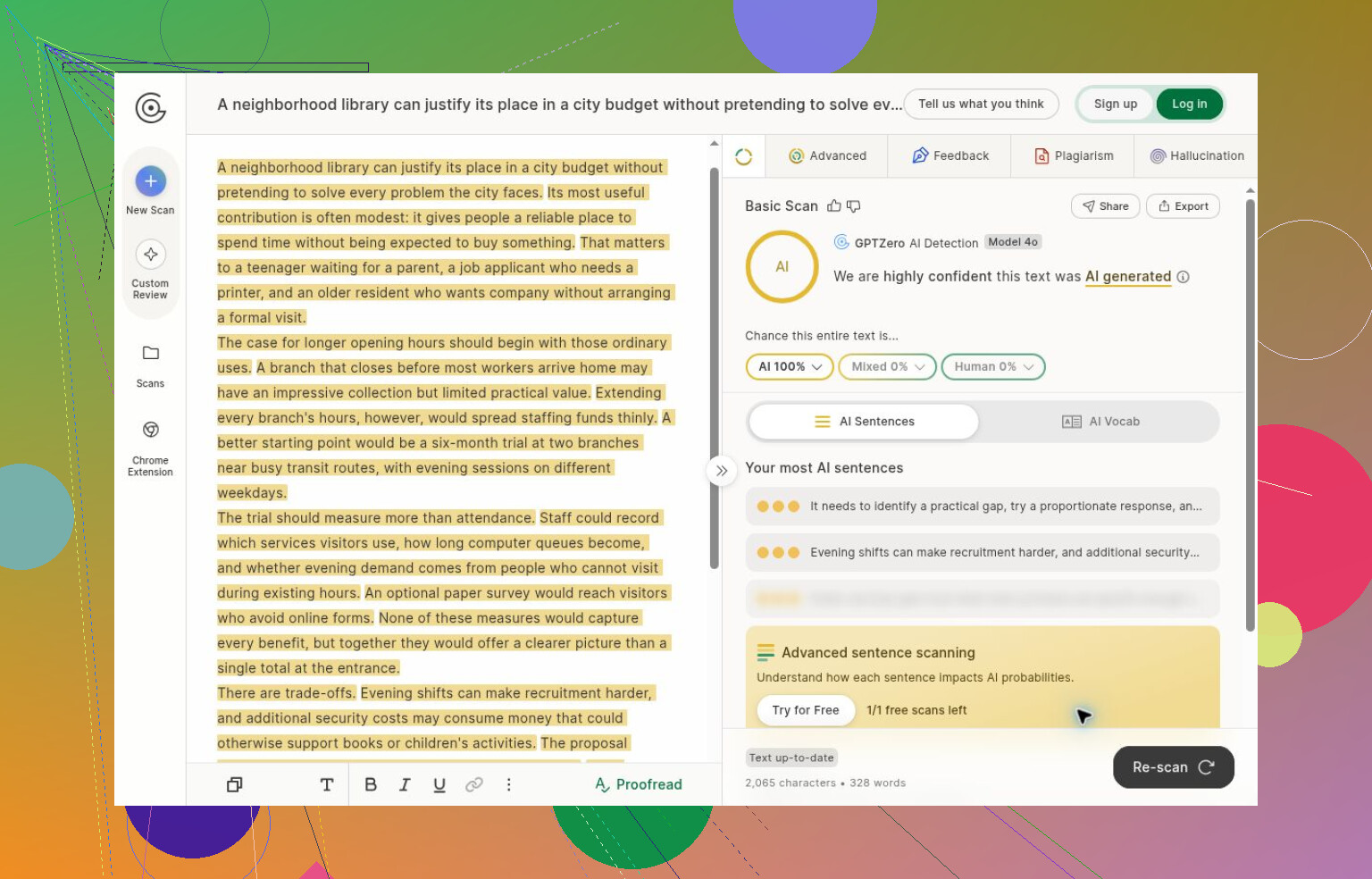
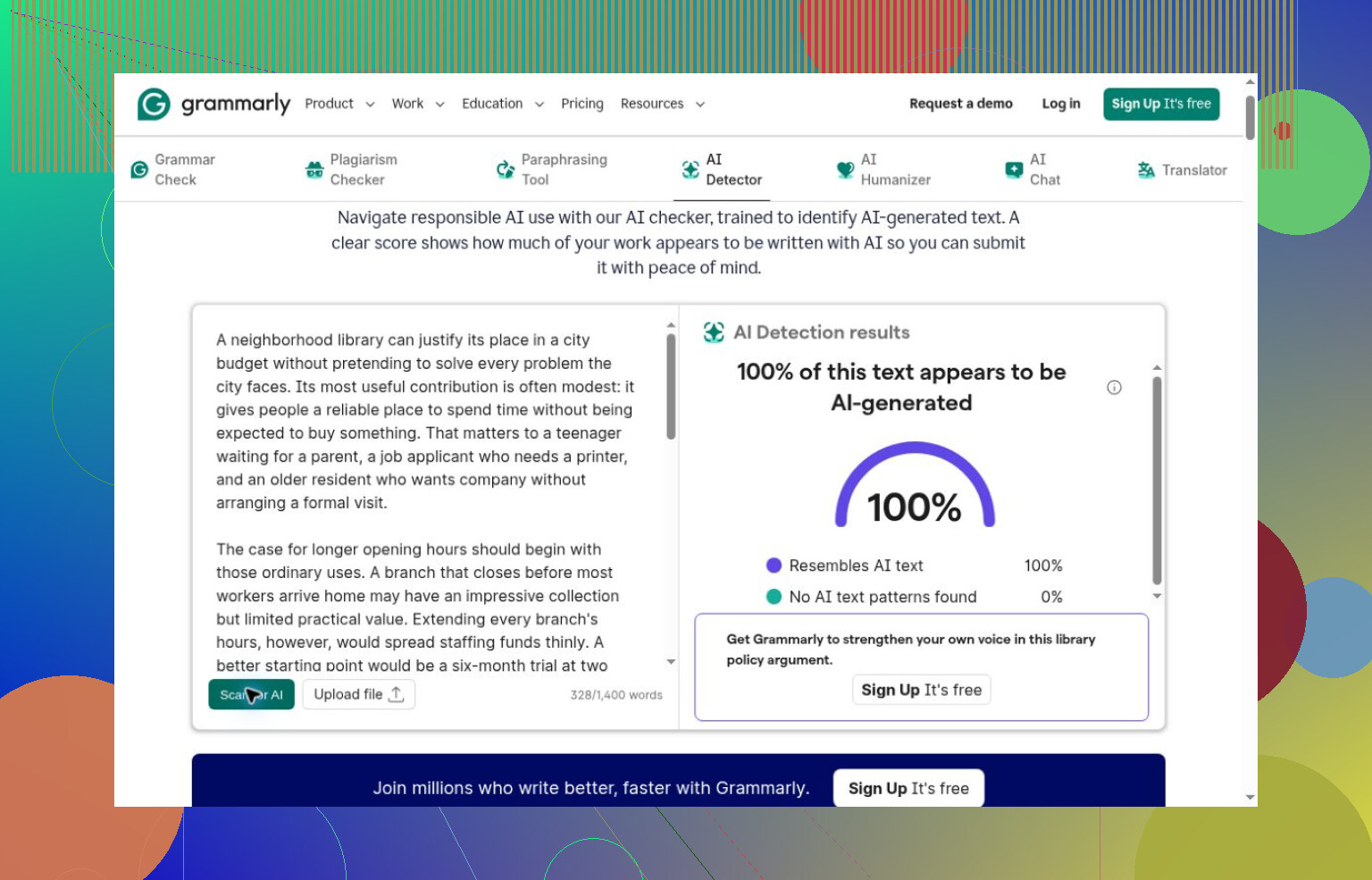
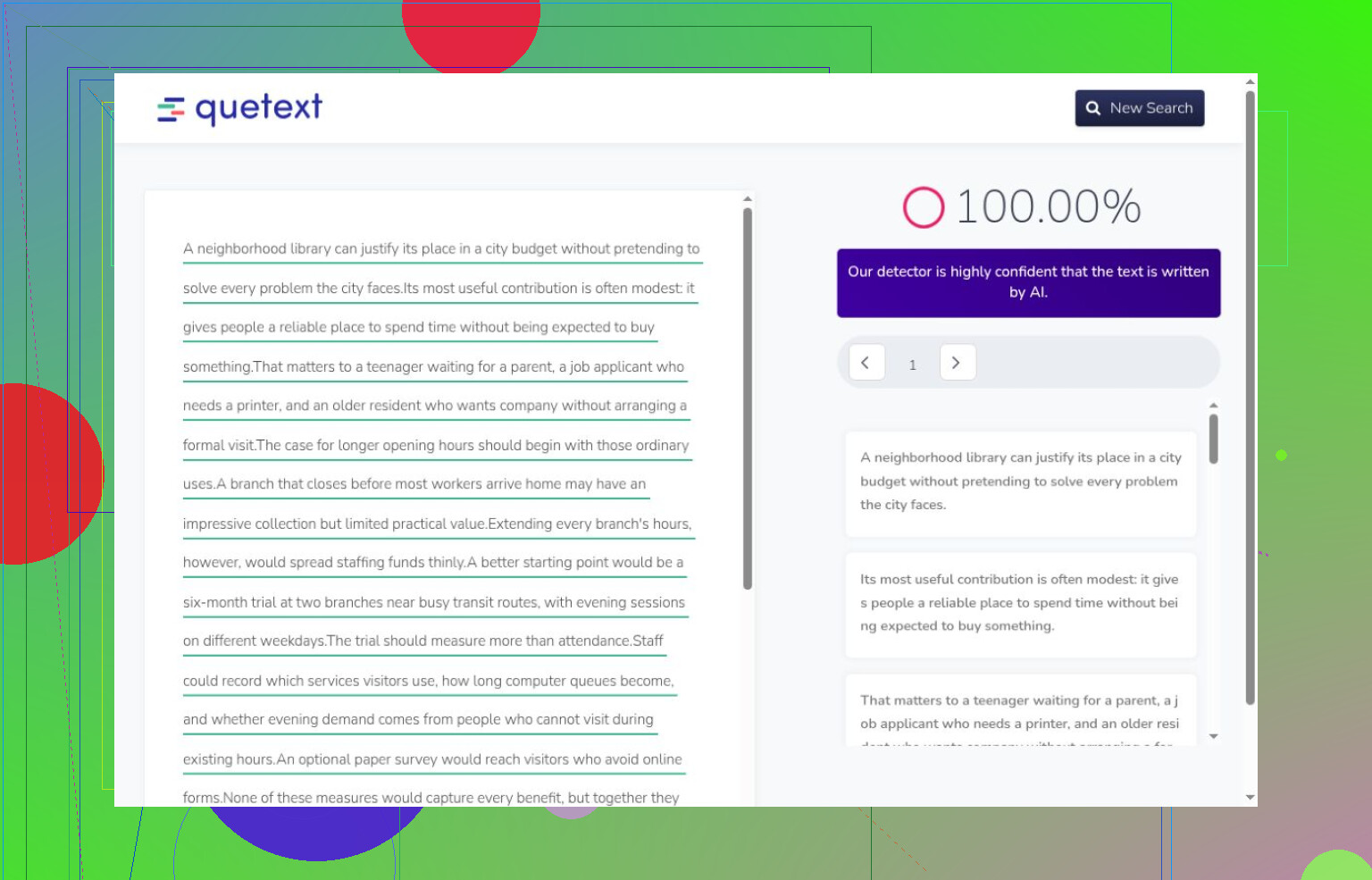
GPTZero caught three generated inputs before registration intervened. Grammarly and Quetext caught the essay before blocking further guest attempts. None supplied a human check in my session.
Checking the disagreements
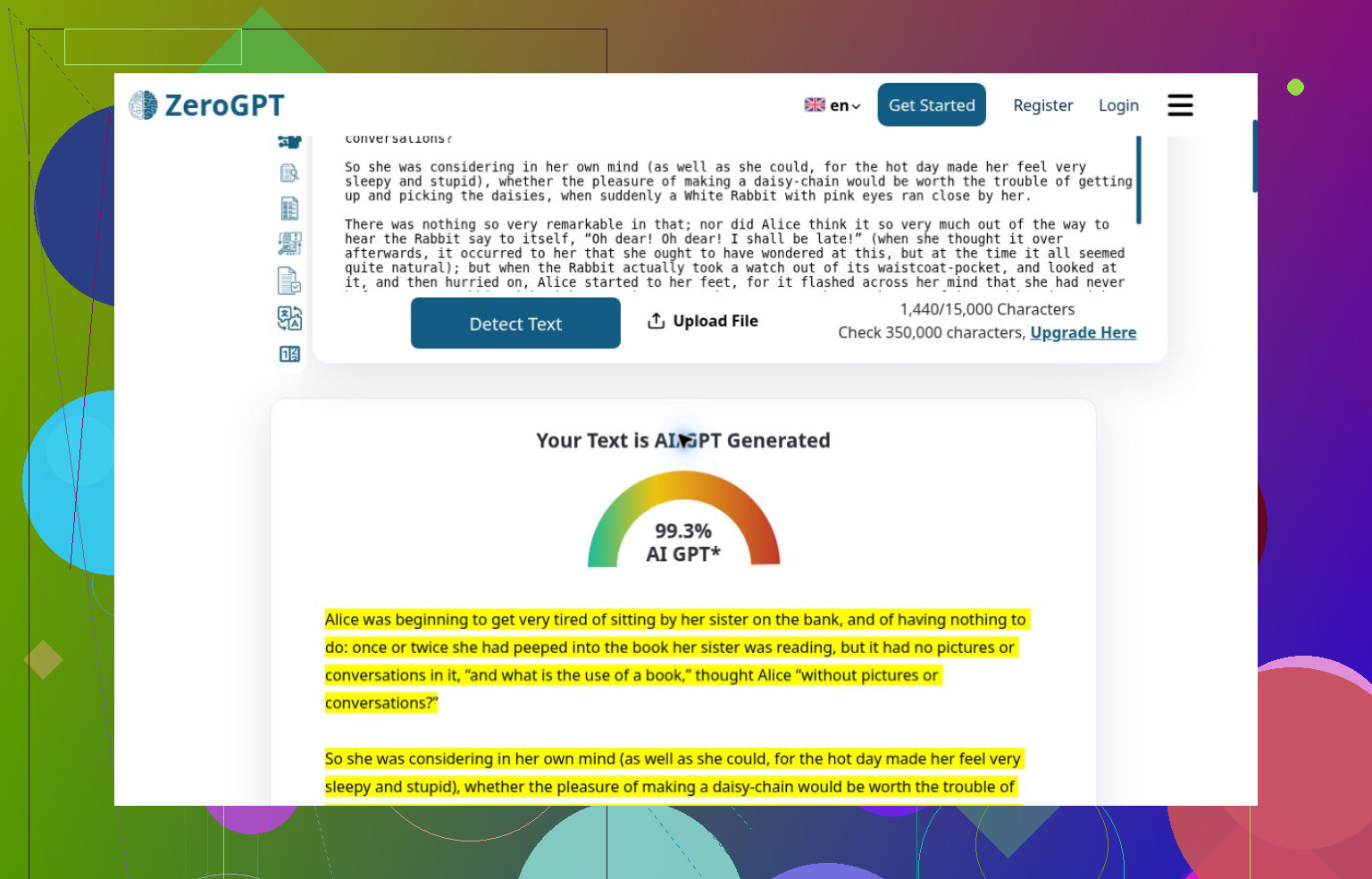
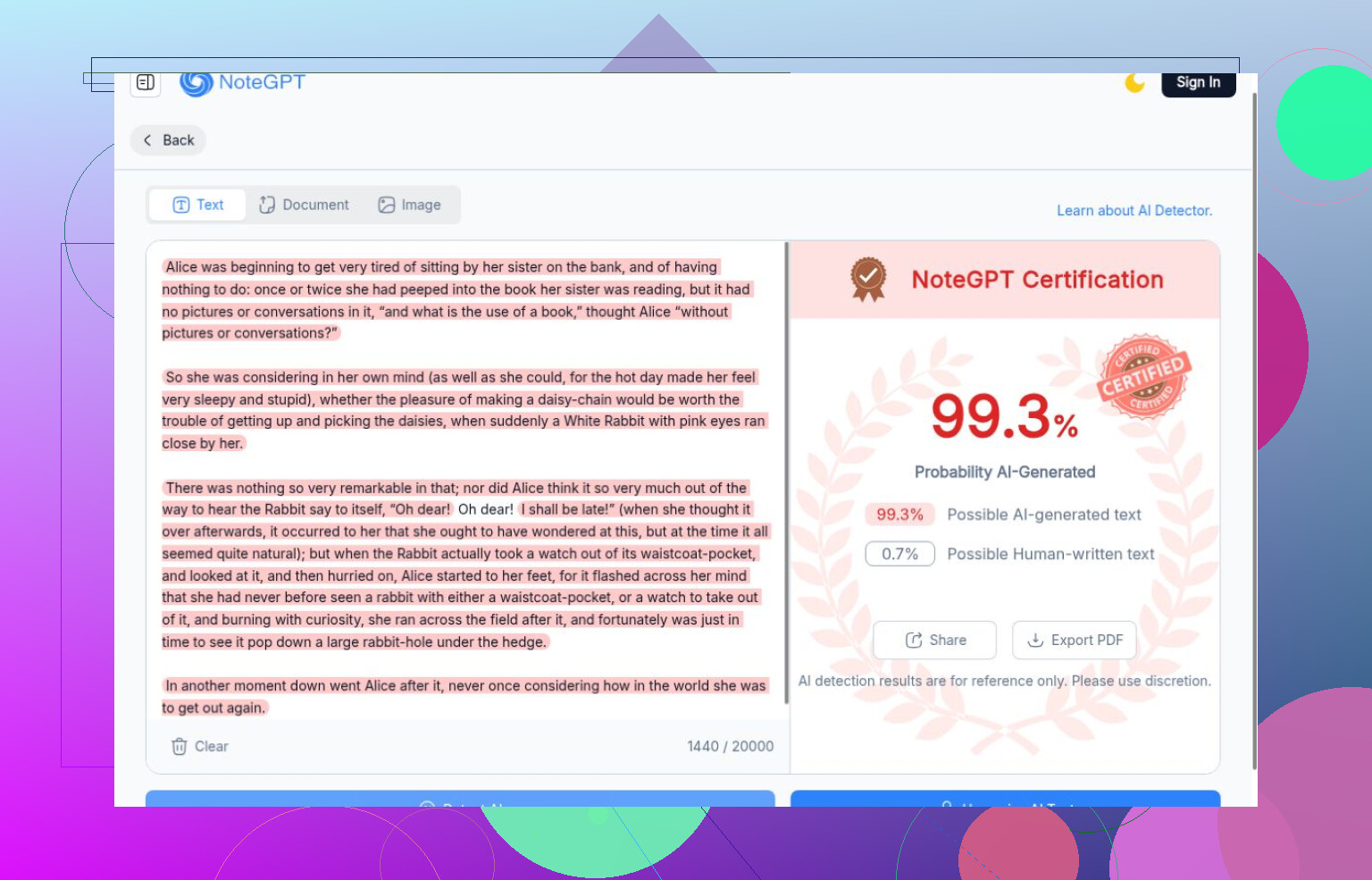
I then compared the mistakes. ZeroGPT caught every generated passage but scored Carroll 99.3% AI. NoteGPT likewise assigned its strongest AI score to Carroll.
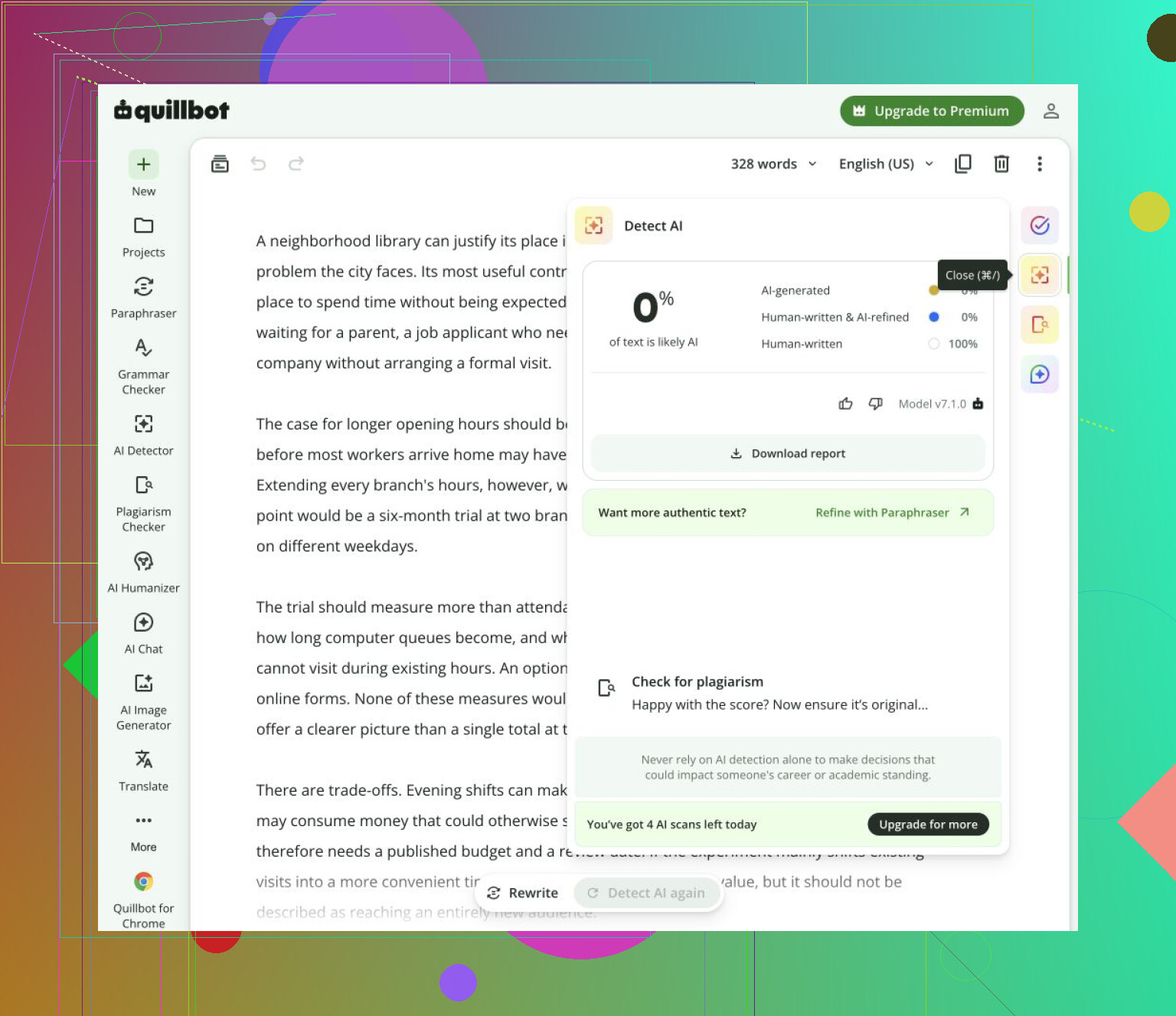
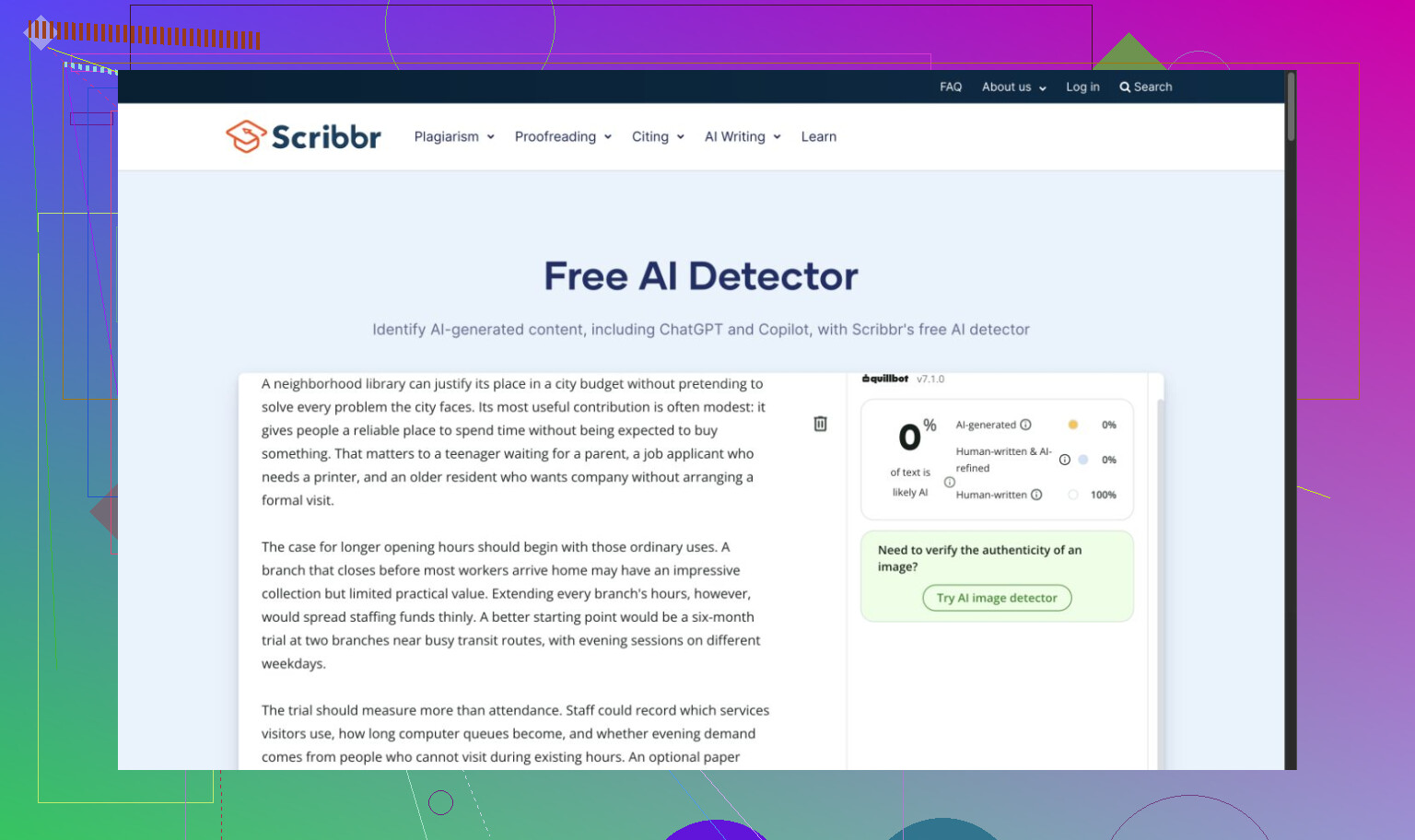
QuillBot called all four generated passages 100% human-written. Scribbr missed the essay on a follow-up; its visible QuillBot branding gave me reason not to assume independent judgments.
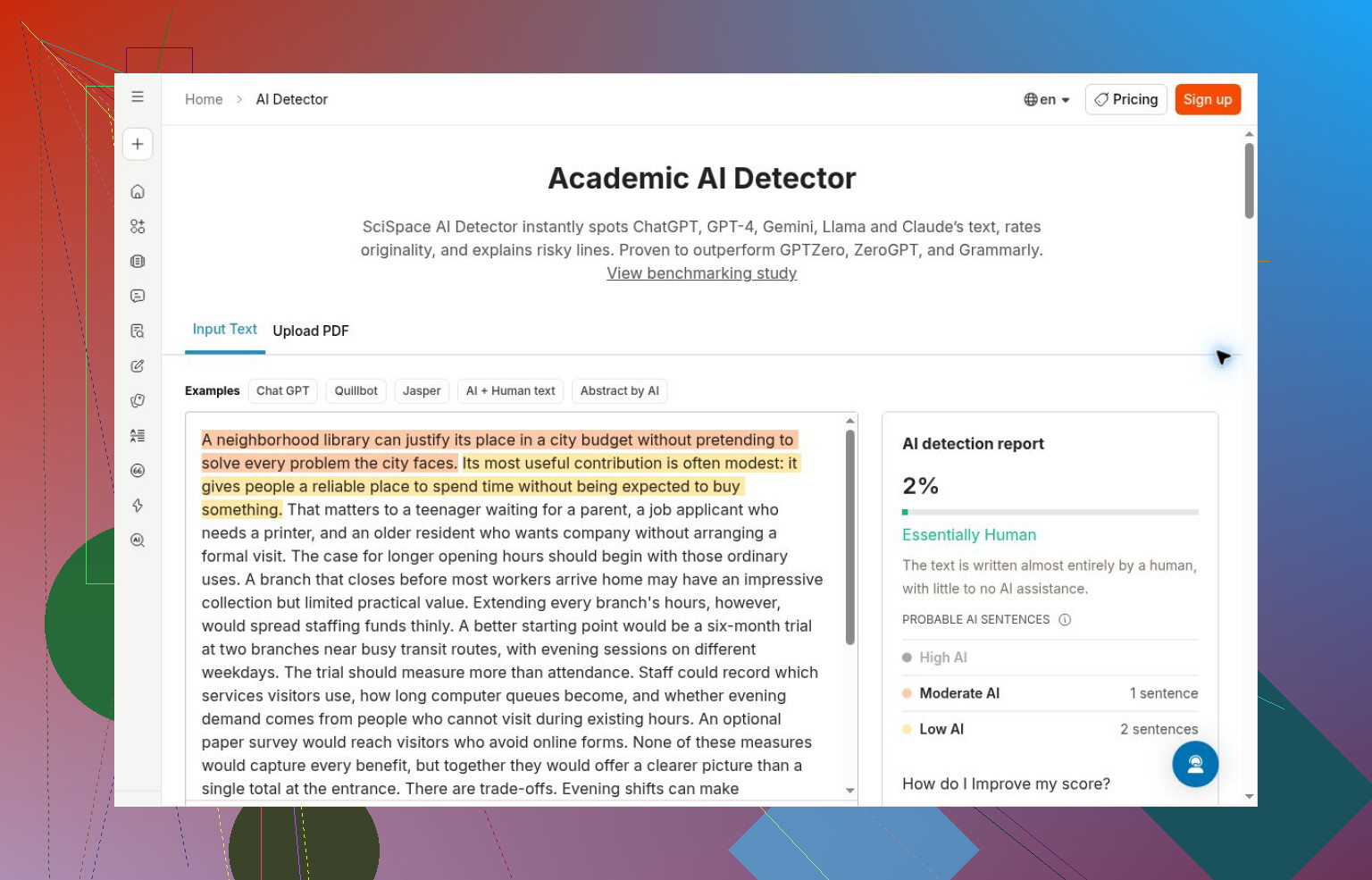
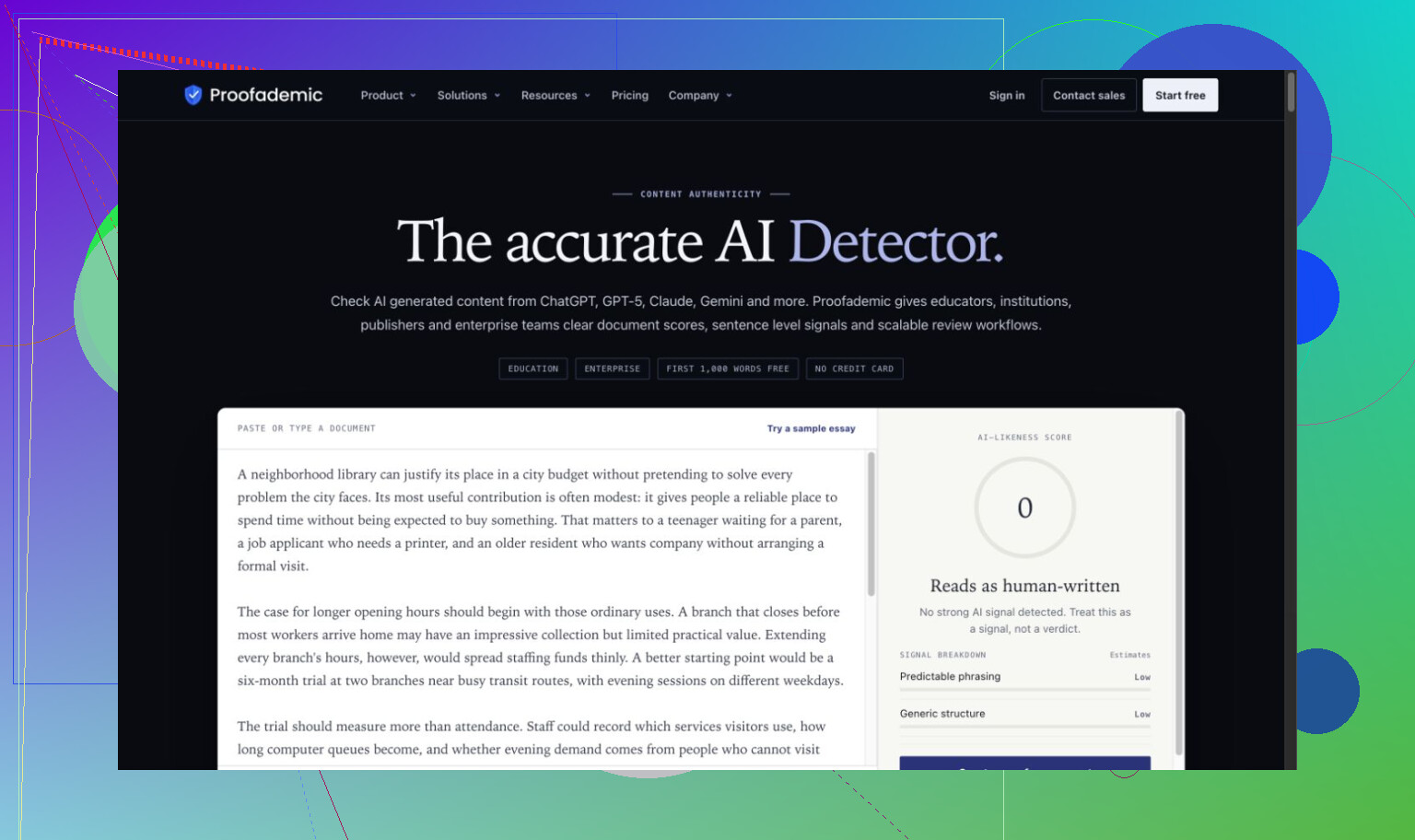
SciSpace rated the essay 2% AI. Proofademic’s public demo gave both essay and Carroll 0/100 AI-likeness. Surfer also missed its generated samples while accepting Carroll. Clear explanations did not rescue those verdicts.
Separating access from accuracy
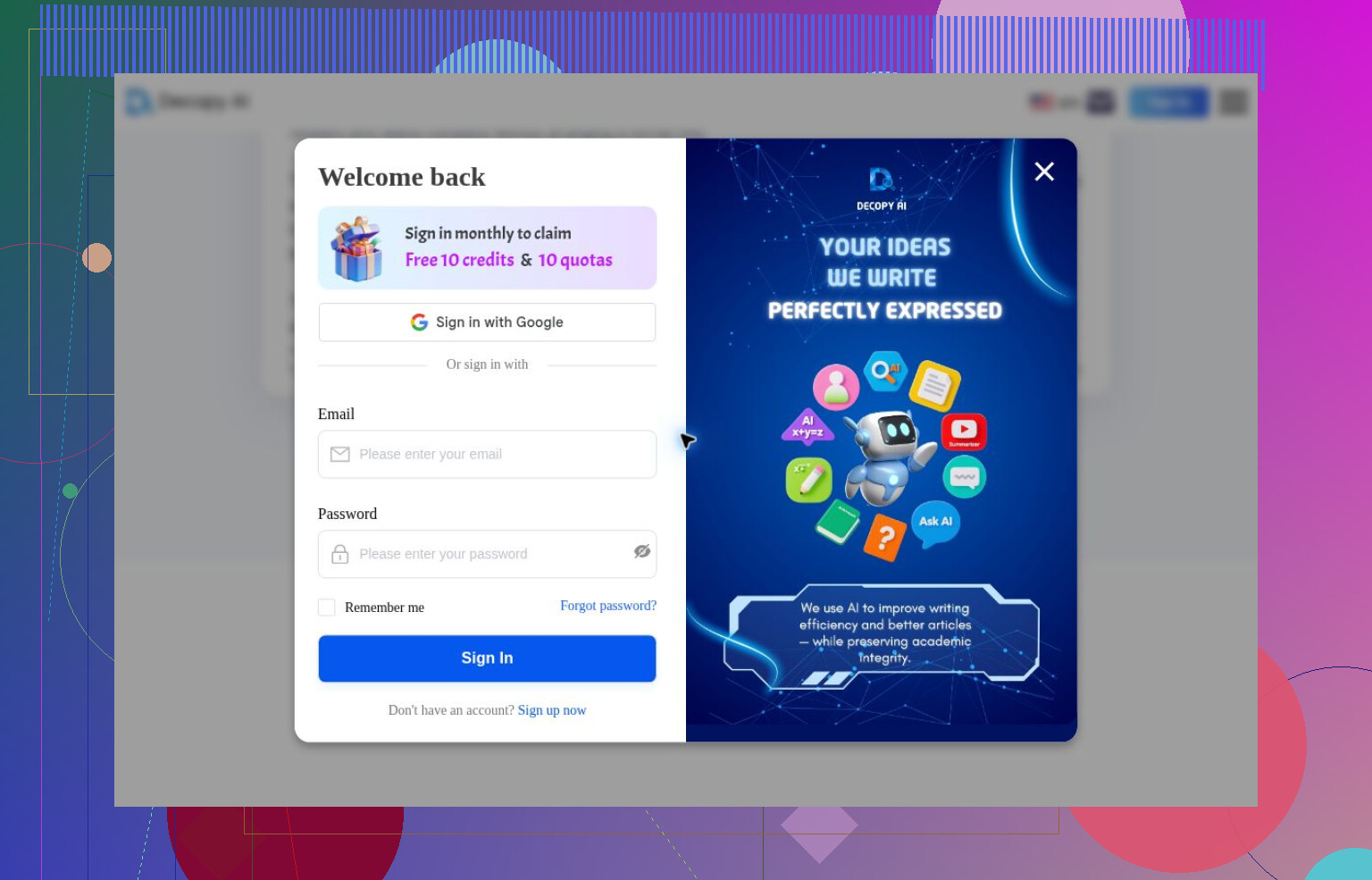
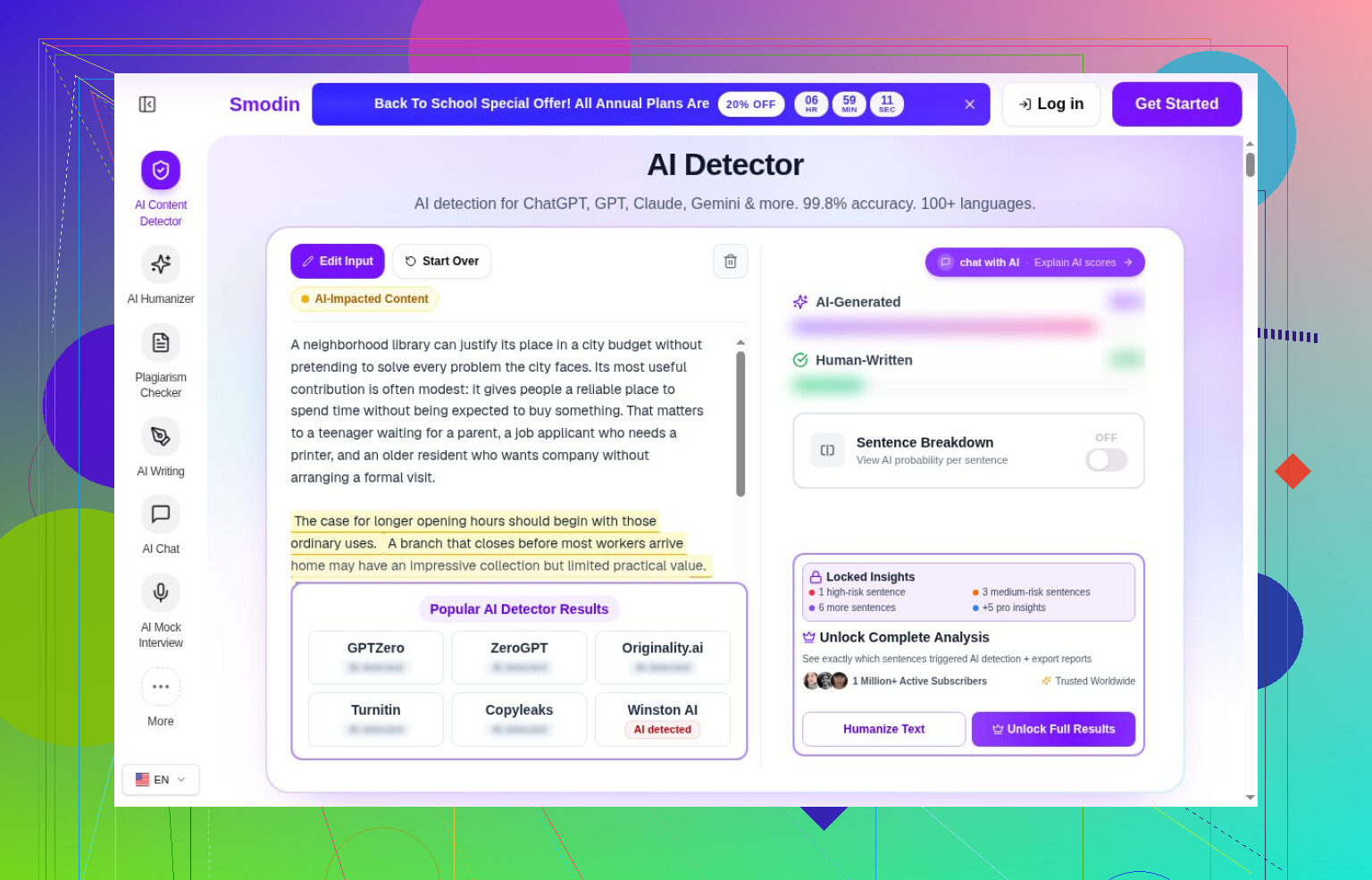
Next, I set aside attempts without usable results. Decopy requested login, and Smodin hid its headline percentages.
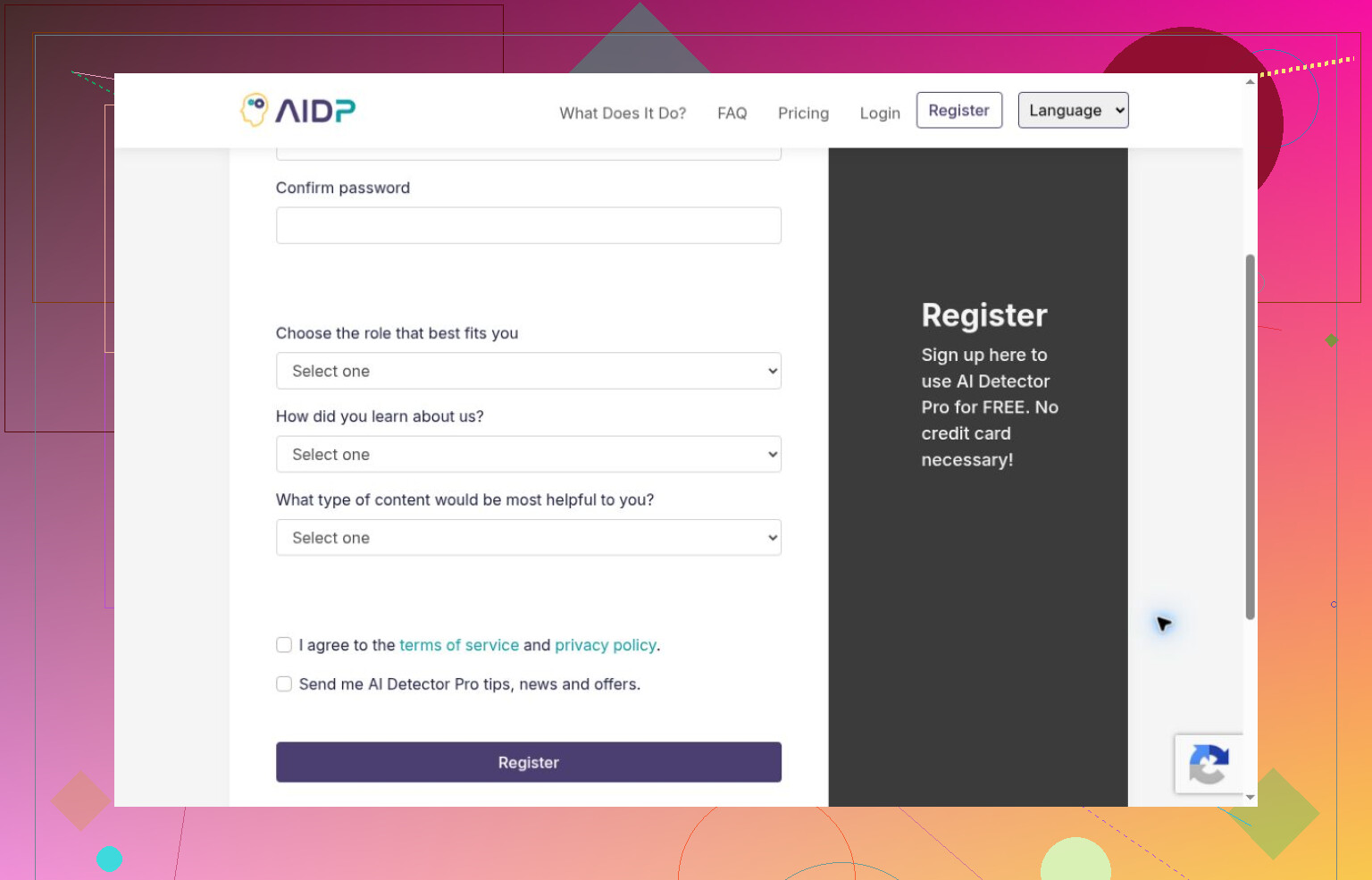
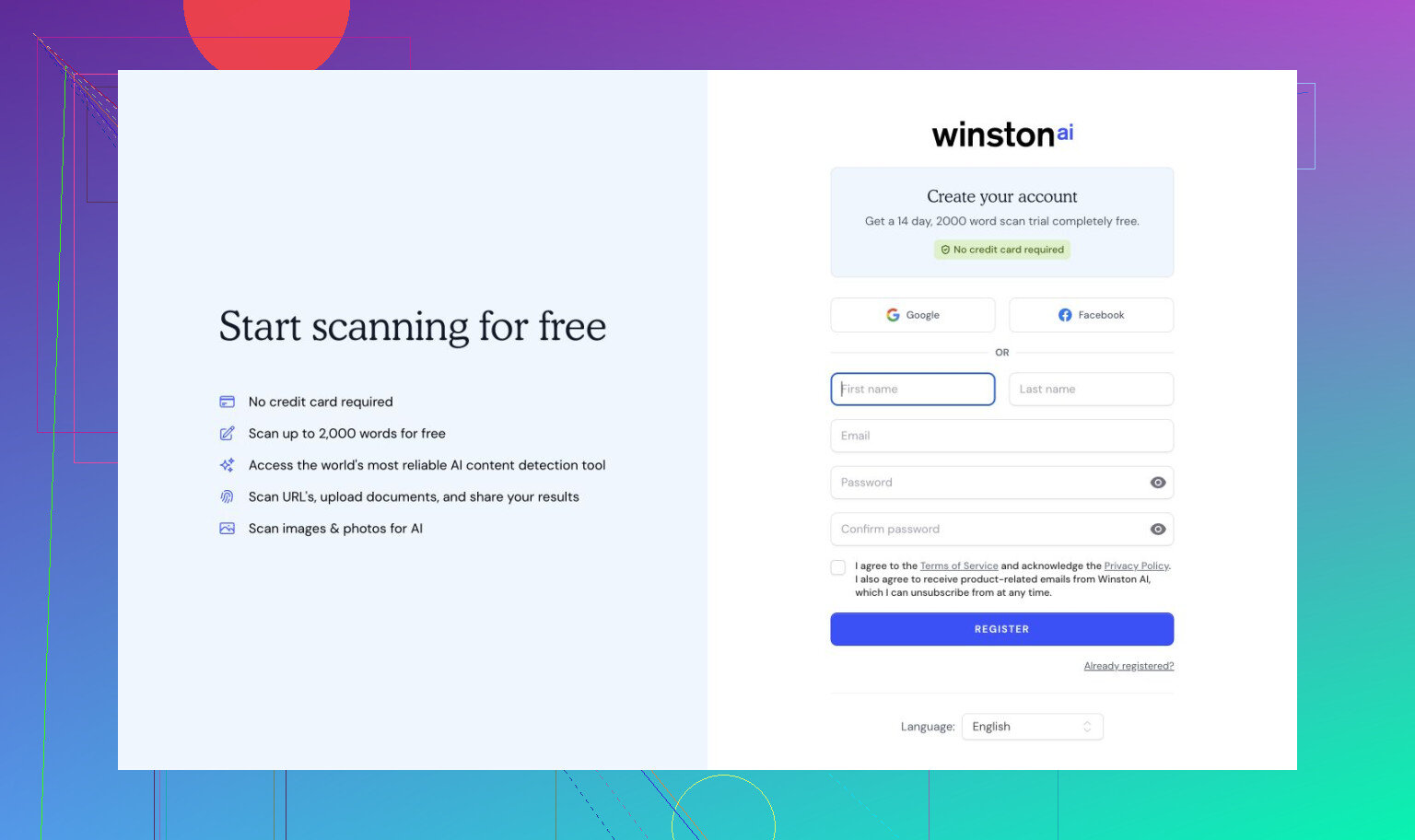
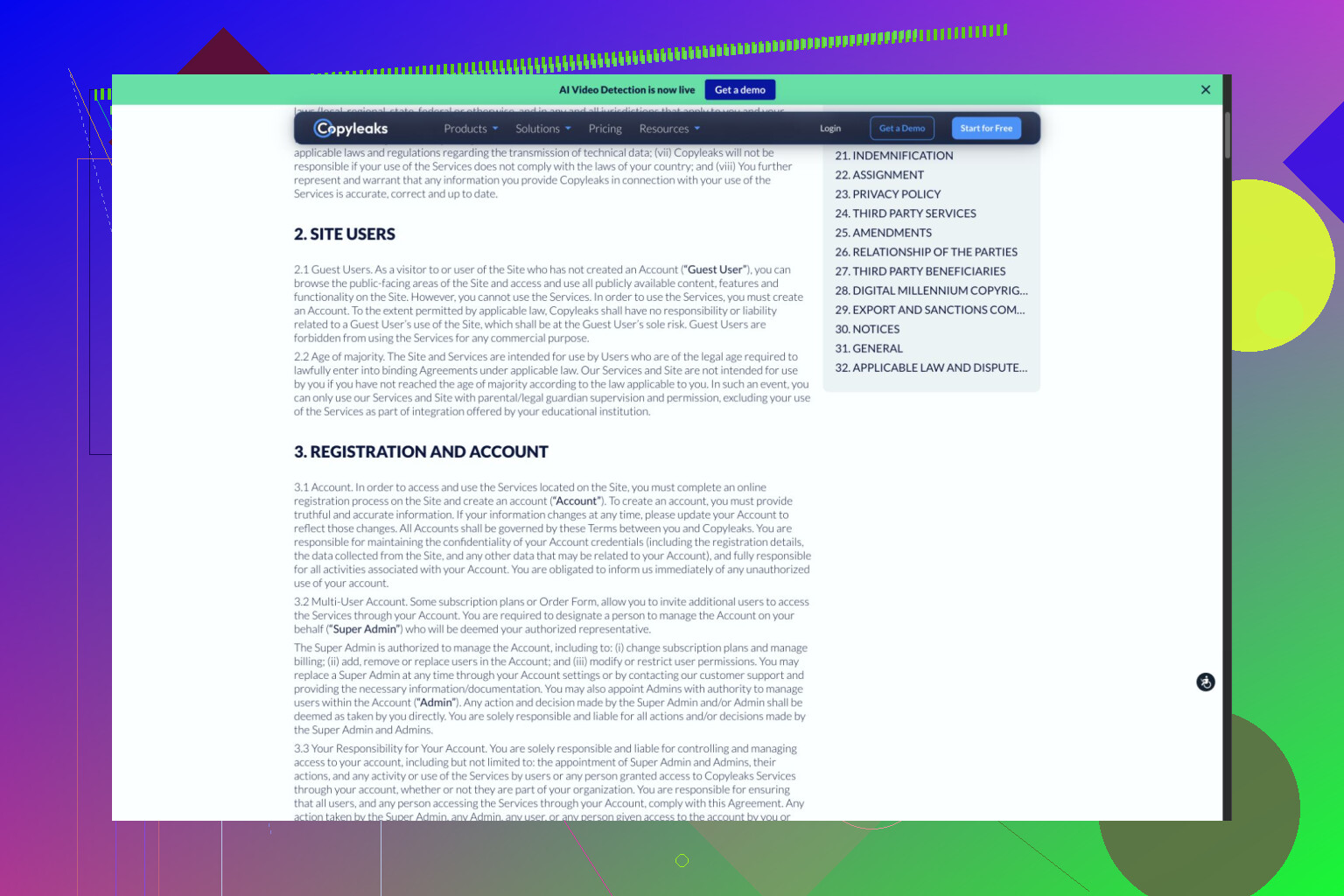
AI Detector Pro and Winston required registration. I stopped at Copyleaks’ applicable-use terms, which says nothing about detection quality.
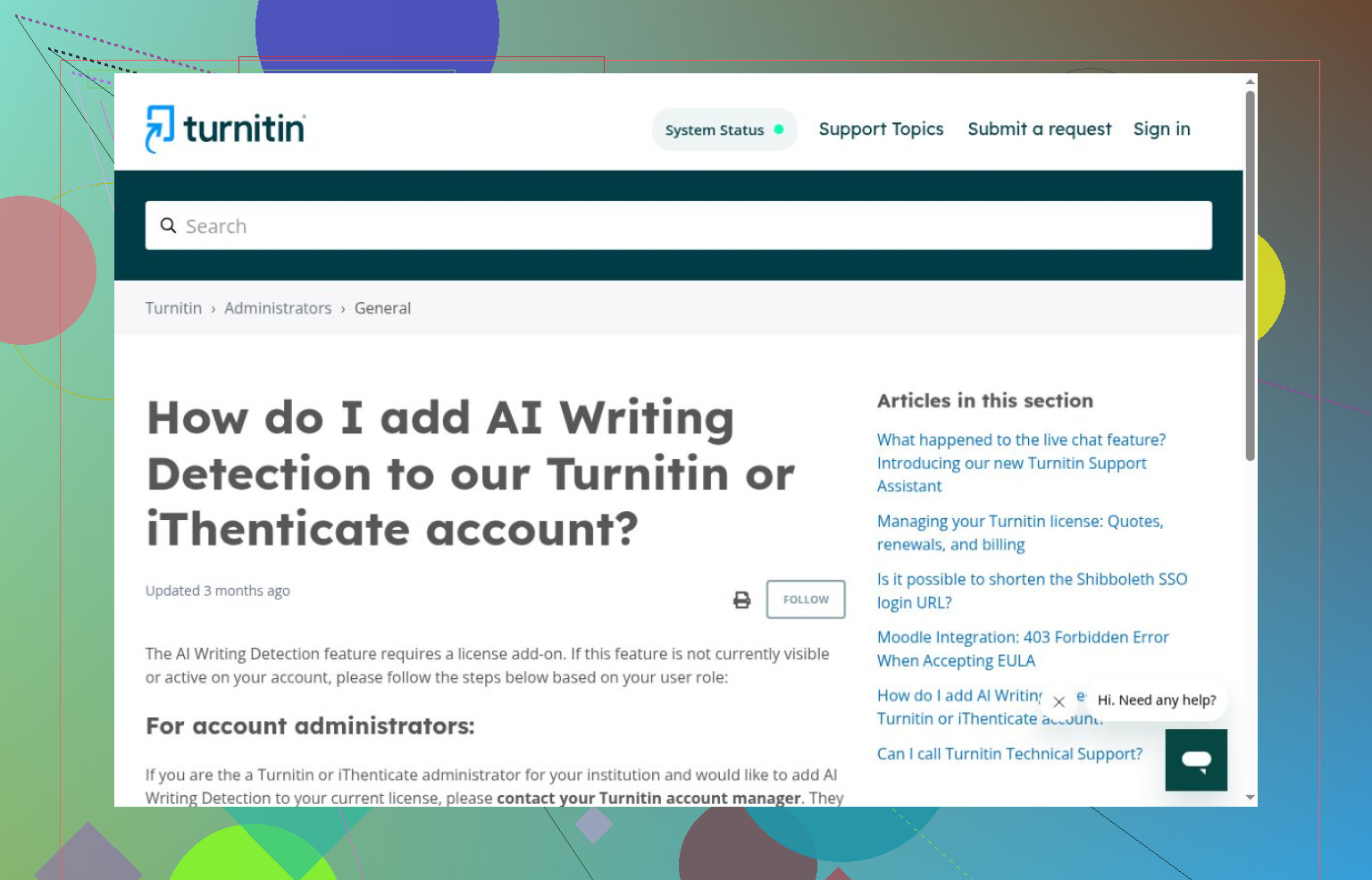
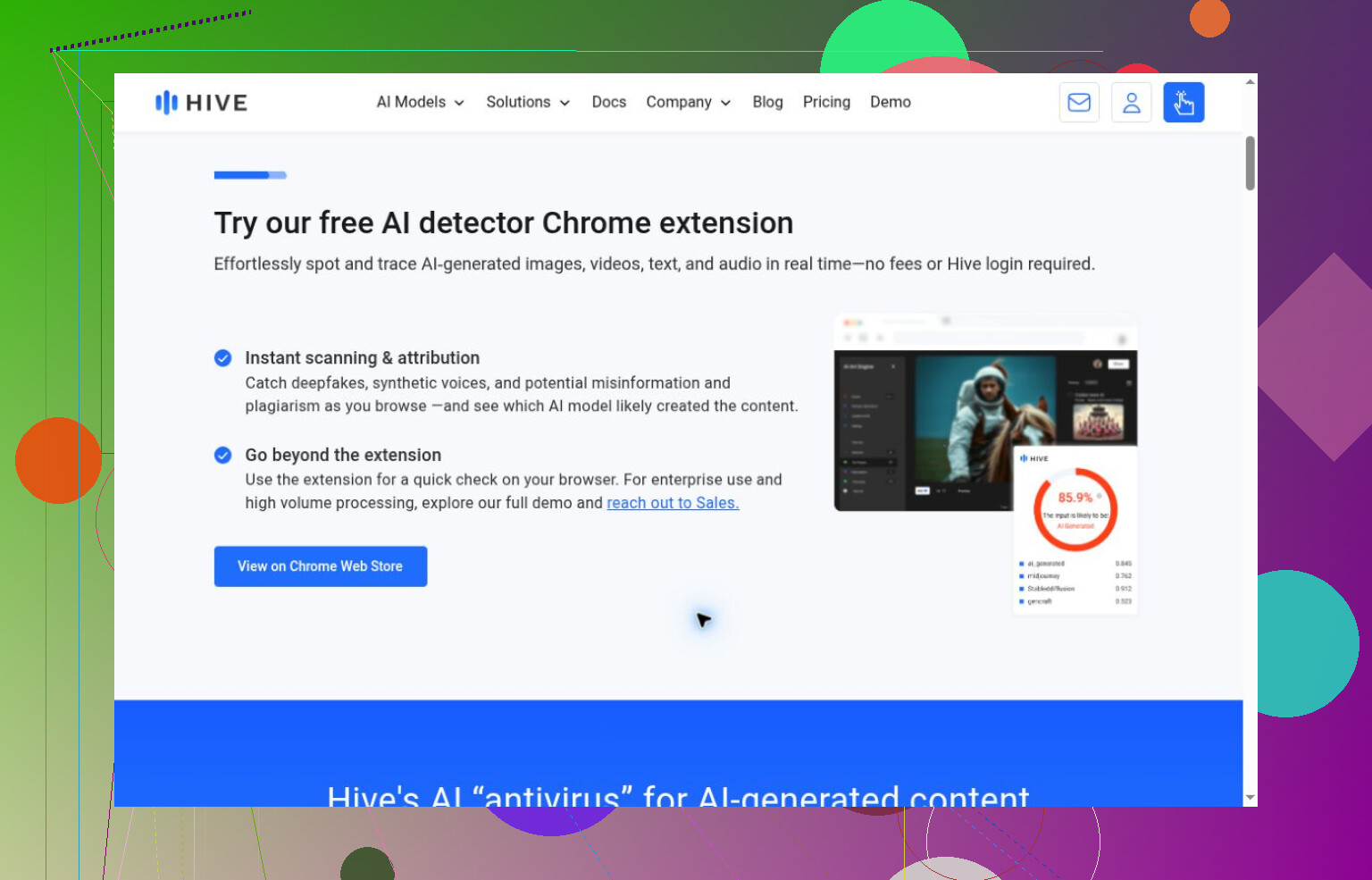
Turnitin needed institutional access. Hive presented extension and API text options rather than a prose web demo. ContentDetector.AI redirected to a Moxby extension listing. I installed neither extension.
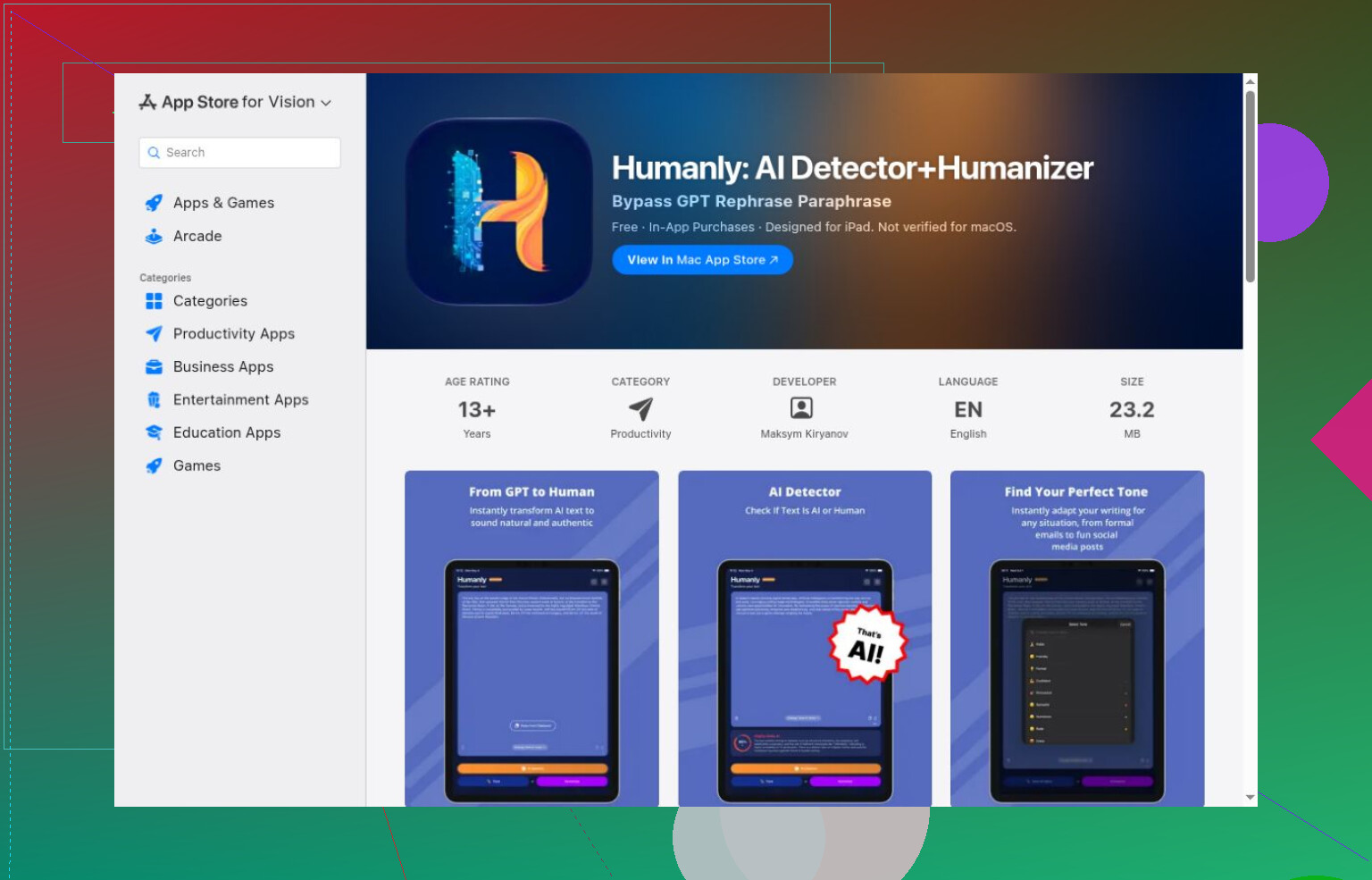
Humanly remained a store-listing inspection, with free download and in-app purchases, not a detection test.
Making the next test useful
By the end, the free Clever AI Detector had been the most practical option for completing my set. That was a limited finding, not proof of general accuracy.
To repeat this, assemble your own known-human writing, generated samples, and edited mixtures. Keep inputs identical, record full-text coverage and access limits, and save each fresh result. Check human errors separately from missed generated writing before deciding whether a tool is useful.
15 Likes
Those final results are not indicating you if the flagged passages are actually worth your precious attention. I would recommend Sapling or Clever A I detector and suggest that the client be given an additional check of those flagged paragraphs only after a comparable reading of each draft has taken place lest valuable time be wasted looking into a highlighted section while another document which was not flagged slips through the cracks.
Don’t let a highlighted paragraph turn into a twenty-minute authorship investigation while the remaining drafts wait. With a deadline, I’d give every closer look a specific editorial question and a stopping point.
That’s where I’d push back on the comparison test: identifying a passage’s origin isn’t the same task as identifying what needs an editor’s attention. For your purposes, the useful outcome is a concrete finding you can act on. “This source doesn’t support the claim” gives you something to send back. “This paragraph sounds generated” leaves you with another unresolved question.
I’d treat Sapling as an optional prompt for closer reading, not the thing that sets your review order. A flagged paragraph with a consequential factual claim would get my attention before a flagged transition or generic introduction. But an unsupported claim in an unflagged paragraph would get the same scrutiny. The submission requirements should decide what matters.
For a detector pass, I’d use Clever AI Detector. I wouldn’t then run the passage through more tools to settle a disagreement. Under this deadline, my stopping rule would be: read the surrounding context, check the specific concern, and either record an actionable issue or move on. If the concern is a citation, check the citation. If it’s a contradiction, identify the conflicting statements. If all I can point to is polished wording, I wouldn’t keep digging on that basis alone.
I’d keep detector observations separate from feedback to the writer, too. “Please provide support for this claim” is a request they can answer. Asking them to explain a score doesn’t tell them what needs fixing. If your submission rules restrict AI assistance, any authorship concern should go through that review process rather than get folded into ordinary revision notes.
So yes, I’d leave room for Sapling in the workflow, but only if you can close a flag without resolving who or what wrote the passage. For this shift, I’d measure its usefulness by whether it helps you find issues worth correcting, not by how many passages it gives you to investigate.
A public blog draft and a draft containing an unpublished client interview are alternative candidates for pasting into a detector. The question of which paragraphs Sapling chooses to highlight is not relevant before addressing if I am allowed to submit those drafts to an external service for evaluation. “Submitted for review” would not be a sufficient reason for me to proceed in that case.
This hesitation is the main reservation I have about using the comparative test described here. It helps prioritize what I try on sample material, but it does not address whether I should upload the drafts I already have waiting for review. I would reserve using Sapling as an optional enhancement for cases where this authorization has already been granted. Otherwise, I would continue screening those documents at my end to avoid spending the rest of my shift on tool qualification. An editorial review does not require an authorship evaluation to be complete.
I would continue to qualify Clever AI Detector for use on the material I am considering for external processing. The only reservation I would have about using it is the need to take additional steps to document what excerpt I pasted there. This observation applies even when the result is not returned to the requesting user.
The recommendation to restrict the review to specific paragraphs requires one clarification. Extracting a few paragraphs can still include a client name, a figure from internal discussions, or a direct quote from an interviewee. Eliminating the author’s name would not satisfy this criterion. I would ask to see the list of approved tools at the stage of learning if such an option exists.
The recommendation to restrict the review to specific paragraphs requires one clarification. Extracting a few paragraphs can still include a client name, a figure from internal discussions, or a direct quote from an interviewee. Eliminating the author’s name would not satisfy this criterion. I would ask to see the list of approved tools at the stage of learning if such an option exists.
Seeing the highlights first can make your manual review less independent: you start looking for reasons a marked sentence is suspicious. I agree with reading each draft first, but I’d take an extra step and write down your concerns before opening Sapling. Keep that initial note short and specific, then look at the detector output.
Next, revisit any highlighted passage in a clean copy, without the colors or score beside it. Ask whether you would still request a change if you hadn’t seen the result. If yes, describe that change in ordinary editorial terms. If no, don’t turn the highlight into another assignment for yourself. That’s the limited role I’d give Sapling here: a second look after you’ve recorded your own judgment, rather than a colored overlay on your first reading.
A flagged paragraph copied from the assignment’s required template deserves different attention than a flagged paragraph containing the writer’s own analysis. I’d consider Sapling for a second pass only after separating supplied wording and quotations from the material the writer was responsible for composing. Reading without the highlights, as @node_kevin40 suggests, helps keep the review independent, but I’d first make sure the passage is actually something the writer had discretion over.
If you’re feeding these tools one paragraph at a time, be ready for the scores to wobble. Most detectors get shakier the shorter the input, and a single flagged paragraph pulled out of a draft is exactly the kind of short sample that throws a confident-looking number for no good reason. So narrowing down to specific paragraphs is sound for your own reading, but don’t expect the detector to behave the same on a lone paragraph as it did on the full piece.
@espritlibre’s split between template wording and the writer’s own analysis is the part worth keeping. Boilerplate, required headings, standard disclosures, all of that trips detectors constantly because it reads like everyone’s version of the same thing. Running it through anything is wasted effort. Strip it before you check, not after.
On the tool itself: I still open Clever AI Detector for a first pass because it doesn’t stall you before you get a result. My one gripe is there’s no clean way to run several drafts back to back without babysitting each one, so for a run of drafts you end up repeating the same paste-and-wait over and over. Fine for a single look, mildly tedious as a stack.
The thing nobody’s said outright is that a detector pass is optional for what you’re actually being asked to do. You can finish an editorial review without ever deciding whether a passage was generated. If a claim isn’t supported, that’s your note. If a quote can’t be traced, that’s your note. The authorship question only becomes yours when the submission rules make it yours, and at that point it stops being a revision note and turns into a separate process with its own handling. For tonight I’d point the detector only at the two or three drafts where something already felt off during the read, and leave the rest alone.