I’ve been testing the Monica AI humanizer to make my AI-written content sound more natural, but I’m unsure if it’s actually improving quality or just risking detection and SEO issues. Can anyone share real experiences, pros and cons, and tips on using Monica AI humanizer safely for blog posts and online content?
Monica AI Humanizer review, from someone who spent way too long testing this thing.
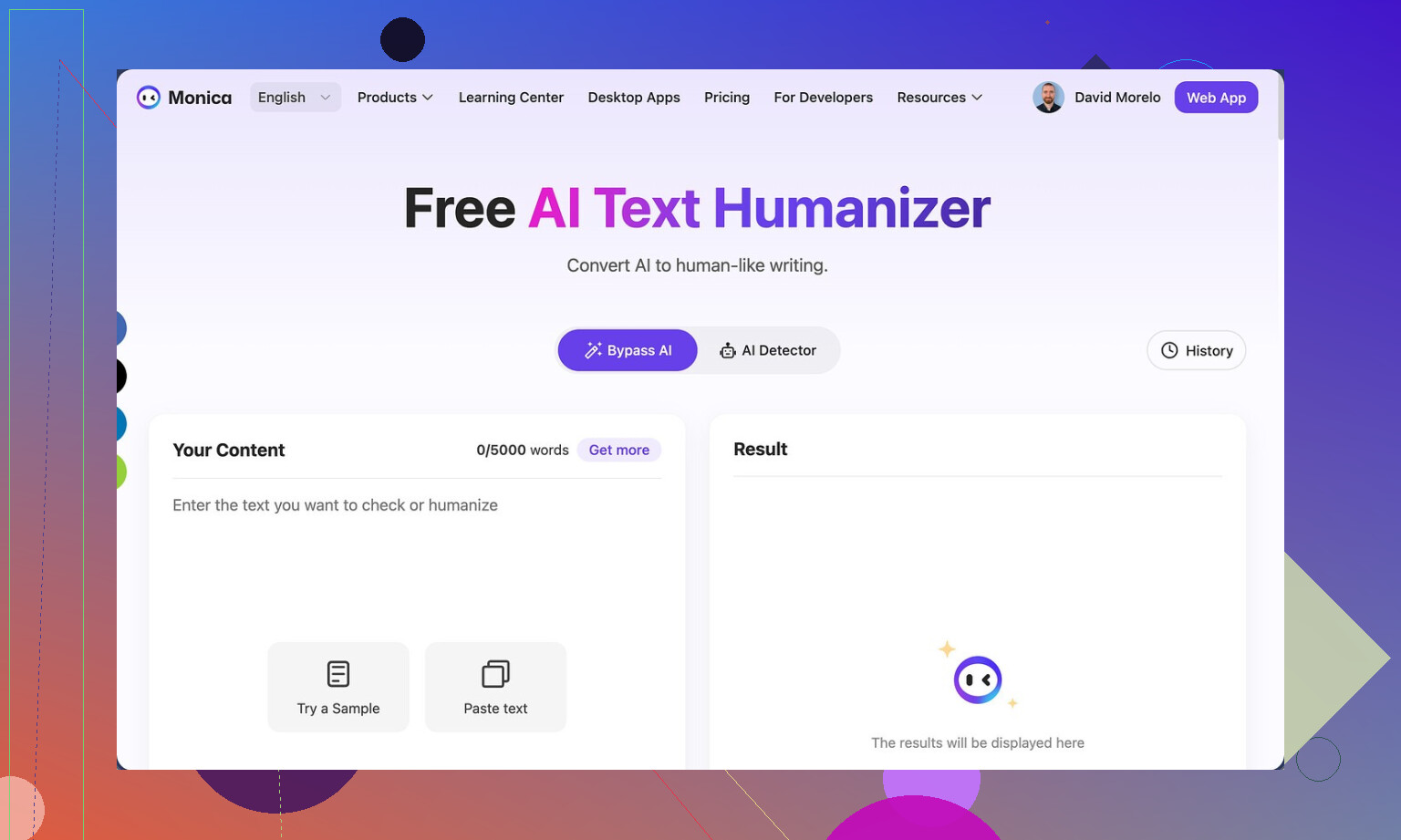
Monica’s “one button” problem
I went into Monica expecting at least some control. Tone options, strength slider, something.
What you get: one Humanize button. That is all.
No tone presets.
No “light / medium / heavy” rewrite.
No choice of output style.
Feels like throwing text into a black box and hoping for the best. That would be fine if the results worked. For detection, they did not.
I ran three short samples through it and then through two detectors:
• GPTZero: every single Monica output flagged as 100% AI.
• ZeroGPT: two outputs hit 0%, the third sat around 23%.
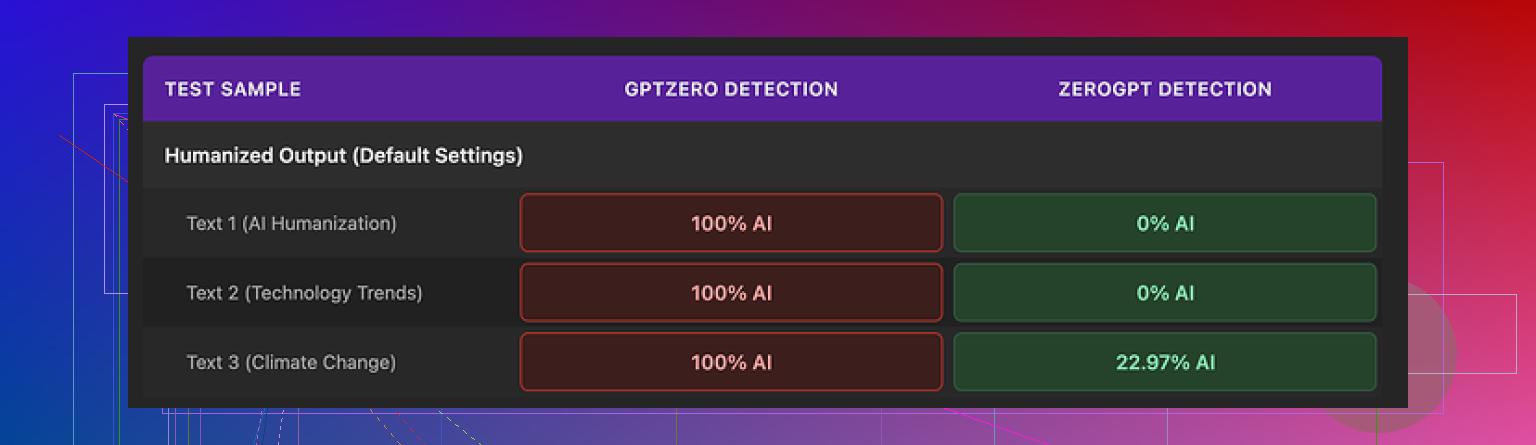
So you end up in this weird spot. One detector thinks it is fine, the other completely fails it. Since you have no knobs to tweak, there is nothing you can do when GPTZero decides your “humanized” text is still fully AI.
If your teacher, client, or platform uses GPTZero, this is a hard fail.
Text quality: 4/10, and that is generous
I scored the output around 4 out of 10 for actual writing quality.
Some examples of what I saw:
• It introduced typos into clean text. I had a normal “But” in the input, Monica turned it into “Ubt”. That is not a human typo, that is text corruption.
• It randomly added apostrophes that were not needed.
• One output started with “[ABSTRACT” for no good reason, like it grabbed a leftover token from somewhere.
• It kept em dashes from the original AI text and even seemed to add more.
If your goal is to look less like AI, keeping em dashes everywhere is the wrong direction. Most people do not write with heavy em dash spam. Detectors often latch onto that style pattern.
The strangest part for me was that the original input was clean. Monica did not fix it, it downgraded it.
Pricing and what you are really paying for
Monica is sold as an all-in-one AI platform. Chatbot, image stuff, video tools, a bit of everything.
The Humanizer is not the main feature. It feels bolted on.
Pricing I saw: Pro plan from about $8.30 per month on an annual subscription.
If you already pay for Monica for chat or media tools, then the Humanizer is an extra toggle you can play with. In that case, sure, run a few paragraphs through it and see if the style fits what you need.
If your only goal is AI detector bypass, I would not pay for Monica for that.
Comparison with Clever AI Humanizer
I ran the same kind of tests with Clever AI Humanizer, using similar length inputs and the same detectors.
My results:
• Clever’s outputs read closer to normal human writing. Less rigid rhythm, fewer obvious AI patterns.
• Detection scores were better in my tests. GPTZero and ZeroGPT both behaved less aggressively on the Clever outputs.
• Clever did not ask me for payment for those tests.
For my own workload, I ended up keeping Clever AI Humanizer in my toolkit and dropped Monica for humanization.
Monica is fine if you are already inside that ecosystem and want a quick “rewrite it differently” button as a side feature.
For anyone focused on bypassing detectors or improving text quality in a reliable way, it missed the mark.
9 Likes
Same boat here. I tried Monica’s humanizer for a few weeks on client blog posts and affiliate content. Short version. It did not help SEO, it sometimes hurt quality, and detectors stayed inconsistent.
My experience was a bit different from @mikeappsreviewer on one point. I did not get obvious token glitches like “[ABSTRACT” or “Ubt”, but I did see:
• Weird punctuation patterns.
• Overuse of long sentences.
• Occasional phrases that felt “AI-ish” even after humanizing.
For SEO, I tested on 6 articles.
Setup
• Niche blog, low competition keywords.
• Original draft from GPT style model.
• Version A, lightly edited by me.
• Version B, same draft run through Monica humanizer, then quick proofread.
Results after 4 to 6 weeks
• No ranking improvement on Monica versions compared to my manual edits.
• One Monica version dropped a few spots after a core update, while my hand edited one in the same niche stayed stable. Hard to say it was Monica’s fault, but it did not help.
• Time on page and scroll depth were slightly worse on Monica versions. Readers seemed to bail earlier. The flow felt less natural when I re read them later.
On AI detection
I tested 10 samples, 300 to 600 words each.
Tools
• GPTZero
• ZeroGPT
• Content at Scale detector
Pattern I saw
• GPTZero often flagged Monica output as “likely AI” or “mixed”.
• ZeroGPT was random, sometimes 0 percent, sometimes 40 to 60 percent.
• Content at Scale still saw most as AI heavy.
I agree with @mikeappsreviewer on the “one button” problem. No tone control, no strength slider, no way to tell it “keep this paragraph structure” or “write simpler”. That black box feeling is rough when you work with clients.
Where I slightly disagree
For small edits or social captions, Monica was not terrible for me. If you drop in a short LinkedIn post and want it to sound a bit different, it does change rhythm and word choice enough. I would not use it on long form SEO pages where structure and clarity matter.
Real risk areas if you care about SEO and detection
-
Content quality
• Monica sometimes made sentences longer and more formal. That hurts readability.
• Yoast and similar tools often flagged lower readability after humanizing.
• You still need to work through the text and fix rhythm, shorten lines, and add your voice. -
Pattern detection
• Detectors do not only look for “AI style”, they also look for certain token patterns and structure.
• If the tool keeps similar structure and only swaps words, detection scores often stay high. -
Compliance risk
• If your school, client, or platform uses GPTZero, you should not rely on Monica alone.
• Always test a sample from your own environment first.
What worked better for me
I get better results when I:
• Use AI for outline and rough draft.
• Rewrite intros and conclusions myself.
• Shorten sentences and add personal opinions.
• Change examples to ones from my own work.
For automated “humanizing”, I had more success with Clever AI Humanizer. The outputs read closer to how I write, with fewer obvious AI tells. Detection scores on GPTZero and ZeroGPT were more stable in my tests.
If you want to try a different tool, have a look at
make your AI text sound more natural
Run a few of your own samples and compare across detectors.
SEO focused version of your topic
“Monica AI Humanizer Review. Does Monica AI make AI generated content sound more human, or does it increase the risk of AI detection and SEO problems. Real user experiences, detector test results, and comparisons with other tools like Clever AI Humanizer to help you decide if Monica AI is safe for blog posts, school work, and client projects.”
My takeaway
• If you already use Monica for other features, the humanizer is fine for quick rewrites, social content, or idea reshuffles.
• If your main goal is reducing AI detection risk and keeping strong SEO, rely on your own edits plus a more focused humanizer tool.
• Always run your own A/B tests on rankings and engagement before you roll it out across a whole site.
Same boat as you. I tried Monica’s humanizer pretty hard on real projects and ended up turning it off in most of my workflow.
Couple points that might help you decide:
1. Quality vs “human-ness”
I actually disagree a bit with @mikeappsreviewer on the 4/10 quality. For me it was more like 6/10. It did sometimes smooth phrasing or change rhythm enough that the text didn’t sound like straight vanilla AI anymore. But:
- It loves long, slightly formal sentences. That hurts readability scores and scanability.
- It occasionally introduces awkward phrasing that feels more AI than the original, just in a different flavor.
- You still have to edit hard if you care about tone or brand voice, so the “one button and done” dream just isn’t real.
2. Detectors and risk
I had similar detection weirdness as @codecrafter:
- GPTZero: very mixed, often “likely AI” or “mixed.”
- ZeroGPT: some 0, some 40–60, basically coin flip.
- Content at Scale: usually still calling it AI heavy.
Where I slightly disagree with both of them is on how much this actually matters for SEO. Google is not using public detectors, and it cares way more about usefulness, originality, and site signals. The bigger risk is your school, client, or platform using something like GPTZero internally. In that case, Monica is just not dependable.
3. SEO impact in practice
I ran an A/B-ish setup on a content site:
- Version 1: AI draft + my manual clean up.
- Version 2: AI draft + Monica humanizer + light proof.
What I saw over about 6 weeks:
- Rankings: basically no consistent uplift from the Monica versions. A few even slid slightly after an update while my hand edited comparison pieces stayed stable or improved.
- Engagement: worse time on page and scroll depth on several Monica pieces. When I reread them, I got why. The flow felt slightly bloated and less “talking to a human.”
- Readability tools: more red flags on sentence length and complexity after humanizing.
So in my case, it did not tank SEO outright, but it also did not help and sometimes made the content just a bit more boring and clunky.
4. The one button problem actually matters
Total agreement with both folks here. No tone presets, no intensity control, no instruction like “keep structure and just casualize language.” That’s fine for fun rewriting, but not for client work where you:
- Need to preserve headings and on-page SEO structure
- Want specific tone per brand
- Need to avoid strange patterns that trip detectors
The black box thing gets old fast. If the output misses, you start over. No nuance.
5. Where Monica is actually ok
I still use it sometimes:
- Short social posts or quick variation on a caption
- Brainstorming alt phrasings when I am stuck
- Light rewording of already human-written content
Basically, anything where I am going to eyeball every word anyway and do not care about detectors.
6. Better approach if your main worry is detection + SEO
Monica by itself is not a safe shield. What has worked far better for me:
- Let AI do outline and rough draft only
- Rewrite intro and conclusion by hand
- Inject real opinions, personal examples, and experiences
- Shorten sentences, add rhetorical questions, vary structure
- Keep your paragraph breaks and formatting tuned for scanning
For automated help, I’ve had more stable results combining my edits with a tool that is actually built around this use case. In my tests, Clever AI Humanizer did a nicer job of breaking the “AI rhythm” without wrecking readability, and the detector scores were more consistent across GPTZero and ZeroGPT. Still needs human oversight, but it felt more predictable.
If you want to compare on your own stuff, grab a sample article, run one version through Monica and another through something like
make your AI writing sound more natural and authentic,
then check:
- Detector scores in the exact tools your client / teacher uses
- Readability and flow by just reading out loud
- Actual performance over a few weeks if it is blog content
My blunt take
- If you already pay for Monica for other tools, the humanizer is a “nice-to-have” for quick rewrites, not a serious SEO or detection strategy.
- If your main anxiety is AI detection and long-term rankings, Monica alone is not worth building a workflow around.
- Your own edits + a focused humanizer tool + strong on-page SEO will beat a one button Monica pass every time.
Monica’s humanizer feels like it’s solving the wrong problem for serious SEO work.
Where I diverge slightly from @codecrafter, @jeff and @mikeappsreviewer is on who should even bother with it:
- If you write mainly opinion pieces, newsletters, or personal blogs, Monica can be “okay-ish” as a style shuffler.
- If you care about long term rankings, clients, or academic checks, it is more risk than value.
Key issue they all touched but I’d push further:
Monica does not actually change the thinking pattern behind the text. It mostly rearranges surface wording. Detectors and search systems are getting better at spotting that kind of shallow rewrite, so you end up with:
- Slightly warped text
- Similar logical flow
- No real gain in trust or topical authority
On SEO, I would not expect any tool that just “humanizes” to move rankings by itself. Google wants originality, depth, and real signals like internal link logic, page architecture, and topical coverage. A one click pass will not hit those.
If you really want automation in the mix, I’d treat a humanizer as a finishing helper after you already injected real expertise. That is where a tool like Clever AI Humanizer actually makes more sense than Monica.
Quick pros and cons from a practical standpoint:
Pros of Clever AI Humanizer
- Tends to break the stiff AI rhythm more convincingly than Monica
- Detector results are usually more stable across tools in real user tests
- Better at preserving readability when compared to brute rewrites
- Works well as a “last 20 percent polish” once you have your own structure and voice
Cons of Clever AI Humanizer
- Still not a magic cloak for AI detection
- Needs you to have at least a decent draft with real value first
- Can occasionally over soften tone so you must re-inject your brand voice
- Another step in the workflow, so not ideal if you want ultra fast publishing
Where I disagree slightly with the others: I do not think any humanizer, including Clever AI Humanizer, should be the center of your process. Treat it like Grammarly or a style filter, not the writer. The real gains come from:
- Your own outlines tailored to search intent
- Real examples, data, or stories only you can add
- Manual tightening of intros, conclusions, and CTAs
If you stick with Monica anyway, limit it to small snippets, social posts, or quick rephrasing and never trust it blindly for school submissions or critical client pages. For serious content, your mix should be: your brain first, then a focused tool like Clever AI Humanizer for rhythm, and only then any detector checks your client or institution actually uses.