My TV isn’t showing up when I try screen mirroring on my iPhone, even with both on the same Wi-Fi. I’m trying to put a video on the bigger screen. Is casting something different from mirroring, and which should I try next to connect wirelessly?
And I’d separate a connection problem from a compatibility problem before installing anything. They can look the same on the phone, but they don’t lead to the same fix. My starting point would be the network, then the TV’s supported connection method, then whether I actually need the whole phone screen on the TV.
There are two routes in play: AirPlay, which is built into the iPhone, and DoCast for the TVs and streaming devices that need another approach. I wouldn’t rank them without knowing what’s receiving the picture. An extra app doesn’t add much if the built-in option already does the job, while a built-in option isn’t useful if the TV can’t receive it.
I’d check that the iPhone and TV are on the same Wi-Fi network before comparing either route. That’s a shared requirement, so it belongs ahead of the choice between them. A guest network can block the connection, and I’d also turn off a VPN on the iPhone while trying to connect.
If they’re still not connecting, restarting the TV and router belongs on the troubleshooting list. I wouldn’t treat that as proof that either method is unsuitable. At that stage, I’m still trying to establish whether the devices can connect at all.
Compatibility decides the first attempt
For an Apple TV or a smart TV with AirPlay support, I’d start with AirPlay. Many newer Samsung, LG, Sony, and Vizio TVs support it, but the brand alone isn’t the deciding detail. What matters is whether that particular TV has AirPlay.
With both devices on the same Wi-Fi, swipe down from the iPhone’s top-right corner to open Control Center, then tap Screen Mirroring. Select the TV from the list. If the television displays a code, enter that code on the phone. Once connected, the iPhone screen appears on the TV.
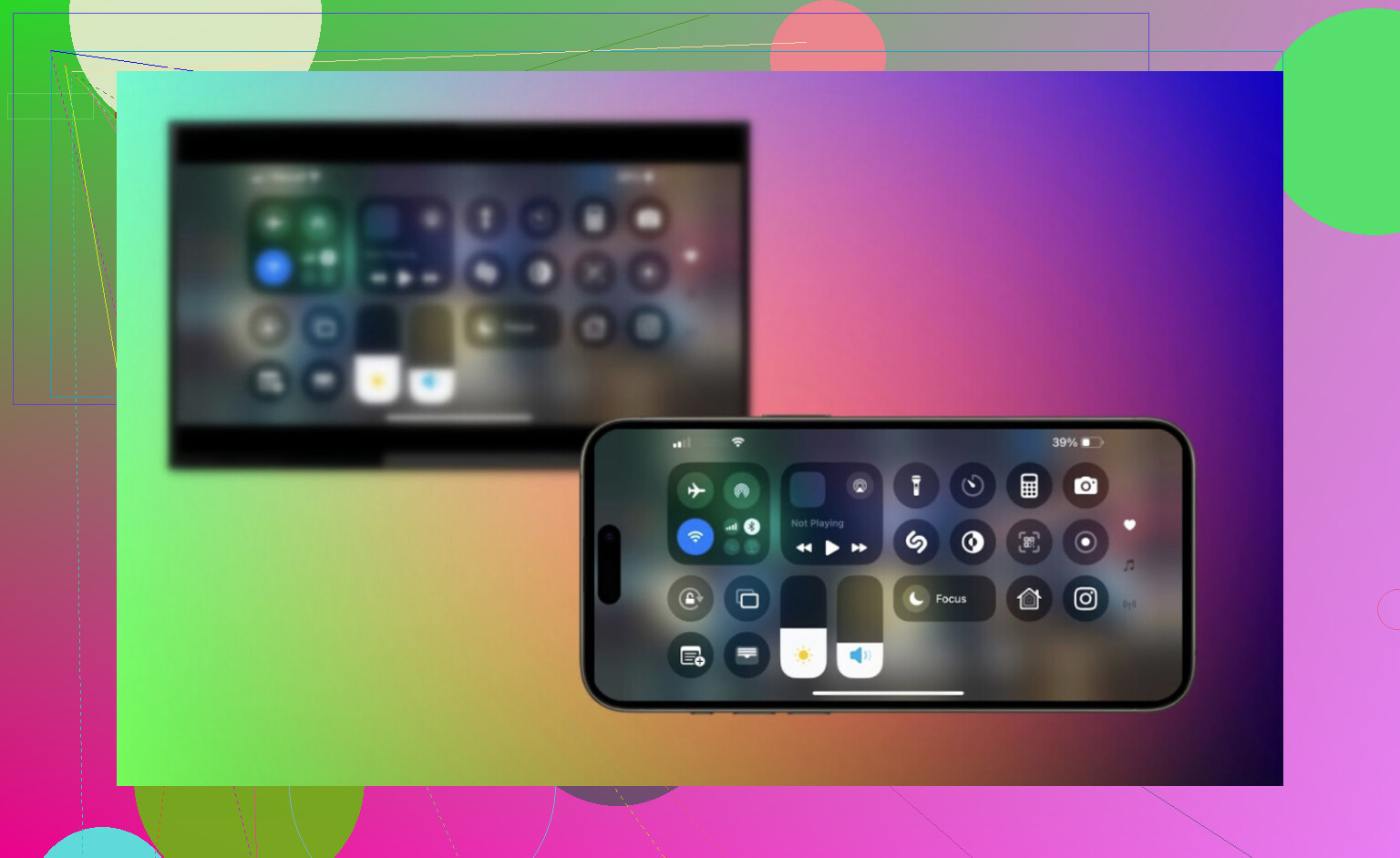
That’s the sequence I’d try before adding another app. If the TV doesn’t appear, I’d check its AirPlay support alongside the network checks rather than keep repeating the same selection process. For a TV without AirPlay, the other route becomes the relevant one.
The connection isn’t the whole comparison
For Chromecast, Google TV, Roku, Fire TV, or a smart TV without AirPlay, the DoCast tool provides that alternative. Install it on the iPhone, keep the phone and TV on the same Wi-Fi, and open the app so it can find the TV. Select the TV, then tap Start mirroring.
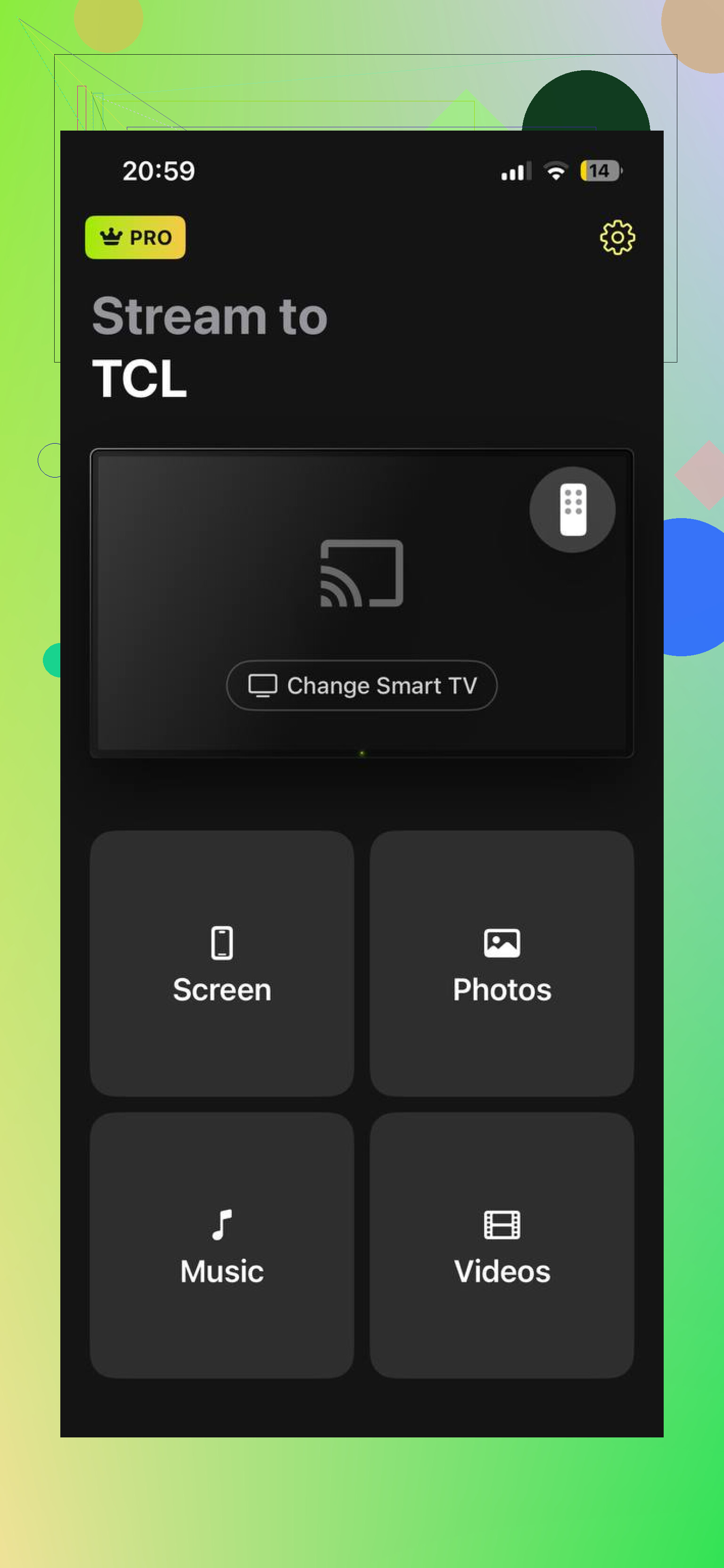
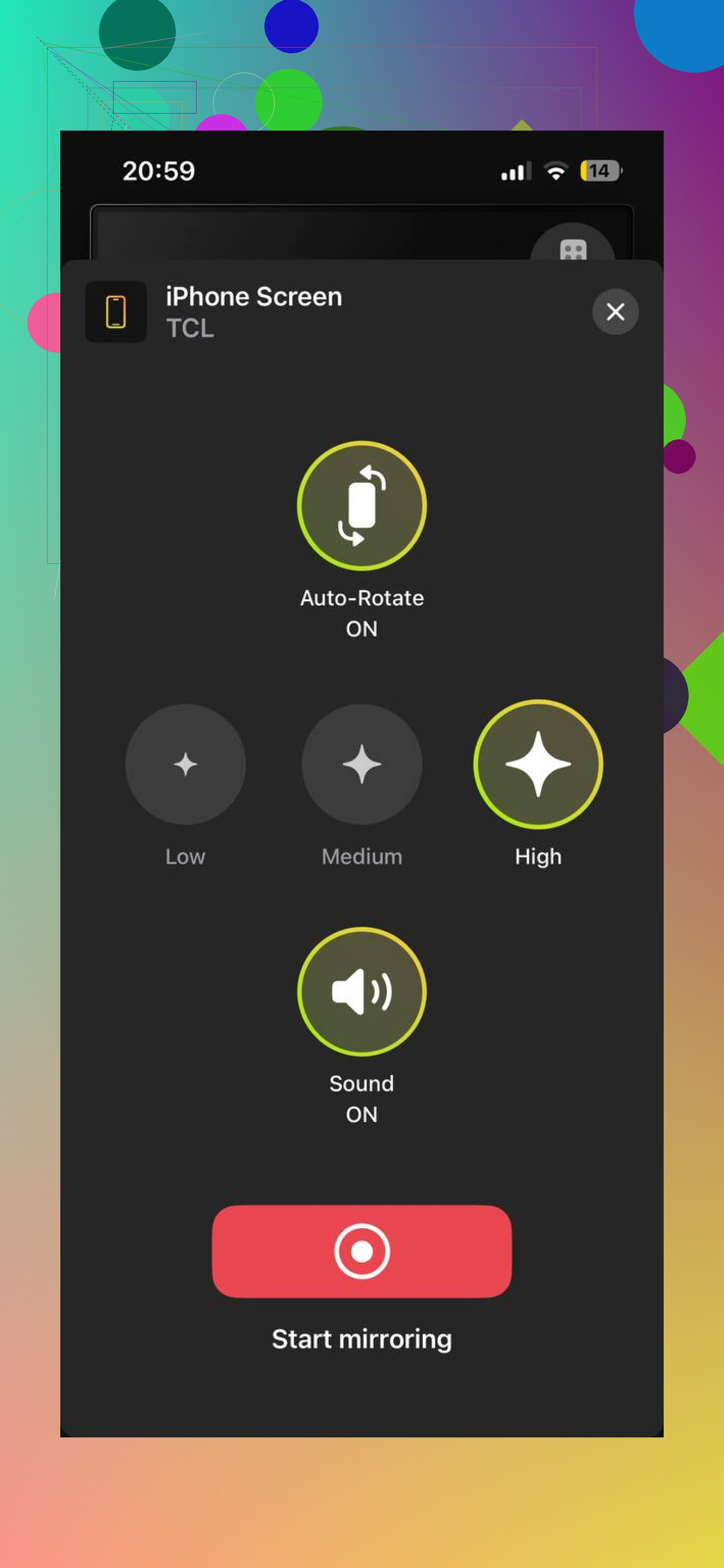
The distinction I’d keep in view after connecting is screen mirroring versus sending media directly. DoCast can mirror the entire screen, but it can also send photos, videos, and music to the TV. Those aren’t interchangeable goals. If I want the TV to show what’s happening across the phone screen, mirroring fits. If I only want to watch a video, sending that video directly is the smoother option described here.
That changes how I’d judge the result. Getting a picture onto the TV answers the connection question. Getting smooth playback answers a different question. I wouldn’t keep mirroring a video just because mirroring was the first mode I selected.
If the picture lags, I’d try the 5 GHz Wi-Fi network if one is available. I’d keep that separate from the earlier discovery checks: a TV that never appears and a TV showing a delayed picture aren’t the same result.
The broader device coverage described on the DoCast page makes it a practical fallback, not an automatic winner for every setup. My preference would change with evidence from the actual devices: confirmed AirPlay support and a successful connection would favor the built-in route, while failed discovery after the network checks, or smoother direct video playback through DoCast, would push me the other way.
11 Likes
A missing TV in Screen Mirroring does not necessarily mean you need another app. This is looking for AirPlay devices. You can mirror your screen but if you have an app that is compatible it will cast the video to your device so you do not see the rest of your phone. Before downloading any apps, I would suggest trying to cast via the Cast button in your video app. If you still have nothing, check the video app has permission to access your local network on your iPhone. This cannot be changed by sharing your Wi-Fi. What video app and TV are you using?
Don’t purchase a mirroring app. Whilst it may be tempting to install an alternative app, you should also consider using your video app. Whilst mirroring will show everything on your phone screen, casting will only show the video. Some video apps don’t support AirPlay even if you have the correct hardware. Try checking if there is an app for the TV for the streaming service you are trying to use. If you are just looking to watch then you may not need to use your phone.
Is the video saved on your phone, or inside a streaming app? I’d put a caveat on @vectorlogic’s fallback suggestion: another mirroring app won’t necessarily overcome the video app’s playback restrictions. For a streaming service, I’d try its supported casting option before spending money just to get the phone screen connected.
If there are any things you wouldn’t like everyone to see on your phone then don’t use the full screen to mirror. Even if everything works perfectly, if you’re mirroring the entire screen it gives me pause. It’s better to send the video than to worry about what I might open up next on my phone.
The wording is what I find confusing: “mirroring” and “casting” sound interchangeable until you spell out what appears on the TV. Mirroring means showing the phone screen. Casting from a supported video app means sending that video instead. For what you’re trying to do, I’d follow @kernelpilot1528’s suggestion and start inside the video app rather than Control Center.
However, the problem is ‘try casting’. This is still dependent on having both an app and a TV. So you could have another question to ask yourself: do I even want this video being sent to my TV using this app? It seems that you only need the first question.
Don’t use the streaming app as your only connection test. I agree with @crystalfalcon about playback restrictions, but I’d try taking the service out of the equation before changing apps or buying anything.
Next, you should try playing a short video from Photos to your TV (if your TV supports Airplay). This will help to determine if your issue relates to playing single videos. Airplay supports both streaming and casting.
If you can play your own video, you know your issue is with the streaming app rather than your Wi-Fi. If your TV doesn’t show up at all when trying to play your personal video, continue to troubleshoot your TV’s receiving settings. You want to know if you can cast anything to your TV, rather than just this one movie.
Same network name doesn’t mean the two devices can actually see each other. AirPlay finds the TV through multicast discovery, and a lot of home routers quietly break that. If your router has band steering, client isolation, or ‘AP isolation’ turned on, the phone and TV can both be on the same Wi-Fi and still never show up in each other’s lists. That lines up with what @kernelpilot1528 said about local network permission, but the router side trips people up more often than the iPhone permission does.
Before you even begin messing with apps, disable this. If you have a router that has separated networks between the 2.4 and 5GHz frequencies, move both your phone and TV onto one network for now. Many older TV models will default to the 2.4GHz frequency and phones will default to 5GHz. This will instantly remove the TV from the Screen Mirroring options.
Check the AirPlay button! Many Samsung/LG sets have AirPlay as an option to switch on. It can be found in the connection menu. Even if your TV does support AirPlay by default, it may not be switched on.
@darkspark5902 has the right instinct testing a Photos video instead of the streaming app. That’s the cleanest way to separate a network problem from an app problem, and I’d do that first. If your own clip plays fine but the streaming app won’t send, it’s the app’s licensing, and no mirroring tool gets around that. If nothing plays at all, it’s the connection, and that’s where the router checks above matter.
Regarding the extra app mentioned in the previous posts, this is only really necessary if you do not have AirPlay on your TV (Roku / Fire stick). It is unnecessarily complicated to install extra software when you simply need to fix the AirPlay on your TV. Once the discovery issue is resolved you can make that choice.