I accidentally deleted important files from my USB drive, and now I’m trying to find the best USB file recovery tool before I make things worse. The drive is still being detected, but my documents and photos are missing. I need help choosing a reliable recovery program that’s safe, easy to use, and has a good chance of restoring lost USB files.
I’ve had this happen enough times to stop trusting USB sticks with anything I care about. You plug one in, and Windows greets you with an empty folder or the lovely “you need to format the disk” message. Then it hits you. USB deletions do not pass through the Recycle Bin, so there’s no easy undo. Your files are gone from view, and your day is shot.
If you want the short version, skip the junky “free” apps that recover a few files, then hit a wall the moment the drive is formatted or the file system breaks. I went through a pile of them. The ones worth your time are the tools with a high recovery rate and a UI you don’t have to fight. For most people, a proper recovery app works better because it searches past simple deleted entries and deals with damage a basic undelete tool won’t touch.
For 2026, the one I keep seeing work across normal USB recovery cases is Disk Drill. I used it on lost docs, camera cards, and one cheap flash drive which started disconnecting every few minutes. What stood out for me was the scan process. It checks with more than one method at the same time and looks for 400+ file types, so it does not fall apart the second the file table gets weird.
The preview feature saved me a lot of wasted time. You scan, click a file, and see whether it still opens before restoring it. I learned to care about this after recovering a pile of dead files from another app. There’s also a byte-to-byte backup option built in. Use it if the USB stick is unstable, slow, or dropping offline. Make an image first, then scan the image on your computer. Less stress on the failing drive, better odds for your data. On Windows, there’s usually a free recovery allowance up to 100MB, which is enough to test whether your files are there before spending money.
If you’re comfortable with denser software, R-Studio is the serious one. I would not hand it to someone who wants a clean, simple wizard and done. The interface feels like it was built for people who read partition tables for fun. Still, it earns its reputation. It’s strong with missing partitions, ugly logical corruption, and cases where consumer apps start guessing. I also prefer its one-time purchase setup over recurring billing, even if the upfront price stings a bit.
If your budget is flat zero, I’d split the free options like this.
- Recuva
This is the easy first shot. If you deleted something recently and you have not kept using the USB drive, Recuva often does fine. I’ve had it pull back files from straightforward mistakes with almost no effort. Where it starts slipping is after formatting, RAW drives, or file system damage. In those cases, it tends to miss stuff paid tools still find.
- PhotoRec
This is the brute force route. It’s open source, ugly, and effective. It ignores the file system and scans raw sectors for file signatures, which helps when the drive structure is trashed. The cost is convenience. No polished GUI. No original names in many cases. No folder layout you remember. You’ll get a dump of files with names like f12345.jpg and spend your evening sorting through them. Still, I’ve seen it recover stuff other free tools left behind, so I keep it in mind for bad cases.
A few rules matter more than the software.
- Unplug the USB drive right away
Overwriting kills recovery. Even when you are not copying files yourself, Windows writes small background data now and then. If new data lands on the sectors where your deleted file used to sit, recovery odds drop hard. I’ve ruined my own chances before by leaving a drive plugged in while trying random fixes.
- Do not restore files onto the same USB stick
People do this all the time, and yeah, it’s a bad move. If the drive you’re scanning is also the drive you save recovered files to, you risk overwriting the exact data you’re trying to rescue. Save everything to your PC, another external drive, anywhere else.
- Check Disk Management first
This step tells you whether software recovery still makes sense. If the USB drive does not appear there at all, recovery apps are not going to save you. At that point you’re in hardware failure territory, and a lab is the next step. If the drive shows up as RAW or Unallocated, software still has a shot.
If I were doing this again today, I’d start with the trial of Disk Drill and see whether the files show up in preview. If they do, you’re in decent shape. If not, I’d move to R-Studio for tougher cases, or PhotoRec if money is the blocker and I don’t mind cleaning up filenames later. That’s the path I’d take.
14 Likes
If the USB still shows up and you only deleted files, I would start simpler than @mikeappsreviewer suggests.
My order:
- Recuva first, if deletion was recent.
- Disk Drill second, if Recuva misses files or the folder structure is broken.
- TestDisk, if the issue looks like a lost partition and not plain deletion.
I disagree a bit on skipping free tools. For clean accidental deletion, paid software is not always needed. Recuva recovers a lot of common doc and photo cases fast. The fail rate goes up after format, corruption, or lots of reuse.
Disk Drill is the better pick if you want previews, a cleaner scan, and support for more file types. It tends to find more on damaged USB sticks. Read more here, see this Disk Drill review for USB file recovery.
One thing people miss, check if your files were hidden. Malware and bad USB errors do this all the time. Run:
attrib -h -r -s /s /d X:*.*
Replace X with your drive letter.
If files matter a lot, stop plugging it in over and over. Failing flash storage gets worse fast. Save recovered files to your PC, not the same stick. Small typo but big mistake, ppl do it all the time.
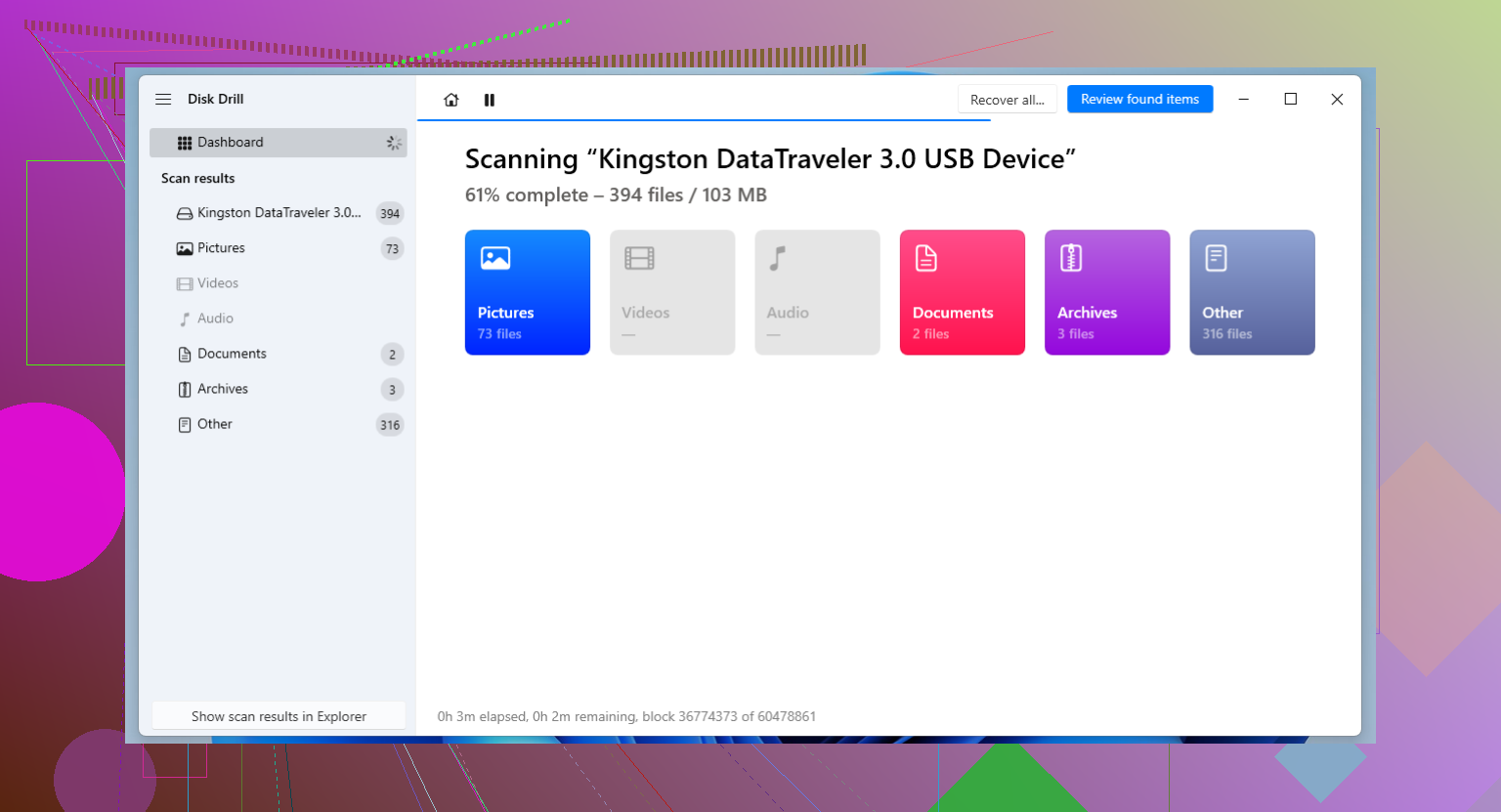
If the USB is still detected and this was mostly accidental deletion, I’d actually split the choice by how much the files matter vs how much hassle you can tolerate.
@nachtdromer is right that simple deletion does not always need the nuclear option, but I disagree a bit with starting too light if the photos/docs are important. Every extra scan tool you try is more time poking a flaky flash drive. For a one-and-done pass, I’d use Disk Drill first because it’s easier to verify results before restoring. Preview matters more than ppl think. If you can open the file in preview, your odds are way better than just trusting a filename list.
Where I differ from @mikeappsreviewer too: I would not jump straight into “best recovery rate” as the only factor. On USB sticks, stability matters just as much. If the drive disconnects, freezes Explorer, or suddenly reads as 0 bytes, stop with consumer tools and consider imaging or pro recovery.
My quick ranking:
- Disk Drill for deleted files plus missing photos/documents on a still-readable USB
- R-Studio if the file system is messed up and you know what you’re doing
- Recuva only for very recent clean deletions
- PhotoRec if you don’t care about original names/folders
Also, before recovery, check whether this is actually a “hidden files” problem or a corrupted directory problem. If the used space on the USB still looks about the same, that’s a clue.
If you want a broader comparison of top data recovery software options for USB drives and deleted files, that list is worth a look too.
Big rule: recover to your computer, not back onto the stick. Sounds obvious, but yeah, ppl still do it and then wonder why the second scan finds less stuff lol.
I’d split this by symptom, not just by app choice. @nachtdromer and @waldgeist are both steering you in the right direction on “don’t overdo writes,” and I partly agree with @mikeappsreviewer on using a stronger tool early, but I would not treat every missing-file USB like a full corruption case.
One check I’d do first that nobody leans on enough: look at the USB’s used space. If the stick still shows roughly the same used capacity as before, your files may be there but the directory entries are damaged or hidden. If used space suddenly dropped a lot, deletion is more likely.
For the tool itself, Disk Drill is a solid middle ground.
Pros:
- very easy to sort results by file type
- preview helps avoid restoring junk
- good at mixed photo/document recovery
- useful if the USB is readable but messy
Cons:
- not the cheapest option if you need full recovery
- scan results can feel cluttered on large drives
- not my first pick for truly advanced partition repair
My take:
- Clean accidental deletion, small USB, recent loss: a light undelete app is fine.
- Missing files plus weird folder behavior: Disk Drill makes more sense.
- USB disconnects, hangs, or goes RAW intermittently: stop testing too many apps and image the drive first.
One small disagreement with the “try everything” approach: every extra full scan on a dying flash drive is gambling. Pick one sensible tool, recover to your PC, then reassess. If I had your exact case, still detected, docs and photos missing, I’d probably start with Disk Drill before moving into heavier forensic-style tools.